
What Is Vectra AI?
Vectra AI is a cybersecurity company specializing in Network Detection and Response (NDR) solutions. Its primary focus is on detecting and responding to cyber threats using artificial intelligence and machine learning algorithms. Vectra AI’s platform analyzes network traffic, cloud environments, and identity processes to uncover malicious activity, even if attackers use stealthy or sophisticated techniques.
The solution offers continuous monitoring and delivers prioritized alerts, assisting security teams in identifying and responding to threats faster. Vectra AI addresses both on-premises and cloud security, making it suitable for organizations with hybrid digital infrastructures. The platform can integrate with other security products and SIEM systems, providing broader coverage and enabling automated response actions.
Vectra is used primarily by enterprises that need deep visibility into east-west network traffic and advanced threat analytics. Its focus on AI-driven detection makes it a strong candidate for organizations seeking proactive cyber defense capabilities.
Editor’s note: Updated Vectra AI competitors to reflect features and capabilities in 2026, and added two new competitors.
Understanding the Vectra AI Platform
Vectra AI delivers an AI-driven Network Detection and Response (NDR) platform built for hybrid environments. It connects visibility across network, identity, cloud, SaaS, AI systems, and endpoints. The platform turns unified network observability into actionable insight, helping teams stop attacks early across a modern attack surface.
Platform architecture
The platform follows a structured pipeline: ingesting, normalizing, and enriching data; analyzing and detecting threats; attributing and correlating activity; and supporting investigation and response. Its real-time ingestion engine monitors millions of IPs daily, processes billions of sessions per hour, and handles traffic at multi-trillion-bit scale. This scale allows it to detect attacker behavior across large and complex environments.
AI models and environment coverage
Vectra AI uses a large set of AI models developed by security researchers and data scientists who study modern attack techniques. The platform focuses on identifying real attacker behaviors rather than relying only on signatures. It covers more than 90% of MITRE ATT&CK techniques and is referenced in MITRE D3FEND. Detections are behavior-based and can identify both known and unknown attacks, including lateral movement and privileged account misuse, even within encrypted traffic.
The platform provides multi-cloud coverage and correlates activity across network, identity, and cloud domains. AI-driven detections surface attack movement across data centers, campuses, remote work environments, cloud infrastructure, and IoT/OT systems. By correlating activity across changing IP addresses and cloud roles, the system identifies the original compromised device or account.
Key Vectra AI Limitations
While Vectra AI offers advanced capabilities in detecting and responding to cyber threats, there are several limitations that users may encounter. These challenges range from technical complexities to cost-related concerns, which can impact the overall user experience. These limitations are from the G2 platform:
- Limited reporting and export options: Users report that built-in reporting is basic, with limited report types and restricted timeline flexibility. Some reviews also mention the inability to export data directly from the console, which can complicate external analysis and compliance reporting.
- High cost for distributed environments: Several users note that deployment can become expensive, particularly for organizations with many branch or remote offices. Hardware appliances and sensors add up in cost across multiple locations.
- Steep learning curve for full utilization: Although the interface is described as intuitive, users indicate that a solid understanding of the platform is required to fully configure and interpret detections. Security teams may need additional training to maximize value.
- Complex initial setup and configuration: Some reviewers describe the setup process as difficult, especially when integrating the platform into existing network environments. In certain cases, organizations required external assistance for implementation and onboarding.
- Hardware and bandwidth constraints for remote sites: Feedback indicates that remote office sensors may have bandwidth limitations, requiring larger appliances in environments that need higher uplink capacity. This can increase infrastructure requirements.
- Time-intensive fine-tuning: Users mention that achieving optimal performance may require extended tuning and adjustment. While results improve after configuration, the optimization process can take time.
Notable Vectra AI Competitors
In light of the above limitations, many organizations are seeking alternatives to Vectra AI. Here are a few common options.
Visibility, Zero Trust and Attack Surface Reduction Platforms
1. Faddom

Faddom is an agentless application dependency mapping platform that enhances network and workload visibility for security, operations, and IT teams. Unlike traditional NDR tools that rely on deep packet inspection or complex configurations, Faddom maps real-time communication flows across hybrid environments to uncover blind spots, shadow IT, and risky east-west traffic.
The platform is especially effective for detecting unauthorized internal connections, supporting segmentation strategies, and reducing the attack surface. Its continuously updated topology maps provide crucial context for incident response and help teams prioritize actions based on real infrastructure behavior.
Key features include:
- Agentless deployment: Installs in under 60 minutes with no agents or credentials required, even in complex or hybrid environments.
- Real-time dependency mapping: Visualizes how applications and systems interact to reveal lateral movement paths and undocumented connections.
- Support for segmentation and risk reduction: Enables teams to plan microsegmentation and reduce exposure by mapping interdependencies accurately.
- Intuitive visual interface: Easy to use across security and IT teams, with continuously updated topology views that support fast investigation and remediation.
Book a demo to discover how Faddom can enhance your visibility and support smarter threat detection across hybrid environments!

2. Zscaler

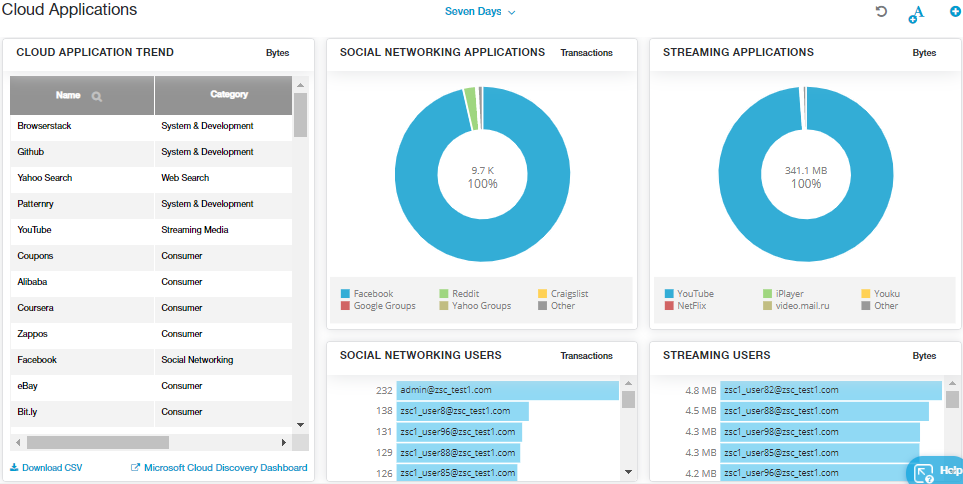
Zscaler delivers a cloud-native security platform built on a zero trust architecture. The platform is designed to protect users, workloads, branches, and devices through a large, globally distributed security cloud. It removes reliance on traditional perimeter-based controls and instead connects users directly to applications with policy-based access controls.
Key features include:
- Zero trust exchange architecture: Connects users and applications directly, enforcing least-privileged access without relying on traditional network perimeters.
- Cloud-native security cloud: Operates on a globally distributed inline security cloud that processes large volumes of transactions daily.
- Data security across channels: Provides visibility and control to secure data across different environments and communication channels.
- AI security capabilities: Secures AI initiatives with controls designed to manage AI assets, applications, and infrastructure risks.
- Agentic SecOps capabilities: Uses insights from its security cloud and third-party sources to assess risk and support detection and containment of threats.

Source: Zscaler
3. Armis

Armis Centrix is a cyber exposure management platform that provides real-time visibility and risk assessment across an organization’s entire digital environment. It continuously discovers and monitors IT, OT, IoT, and IoMT assets without requiring agents. The platform uses AI-driven asset intelligence to identify vulnerabilities, prioritize remediation, and reduce cyber exposure.
Key features include:
- Asset discovery: Continuously discovers and monitors IT, OT, IoT, and medical devices across environments without requiring agents.
- AI-driven asset intelligence engine: Uses AI to provide real-time visibility, risk insights, and threat detection across connected assets.
- Automated risk scoring and prioritization: Identifies and prioritizes vulnerabilities to guide remediation efforts.
- Dynamic network segmentation support: Helps enforce security policies and reduce risk through segmentation capabilities.
Compliance and reporting support: Simplifies compliance reporting and supports audit readiness with centralized asset intelligence.

Source: Armis
4. Illumio

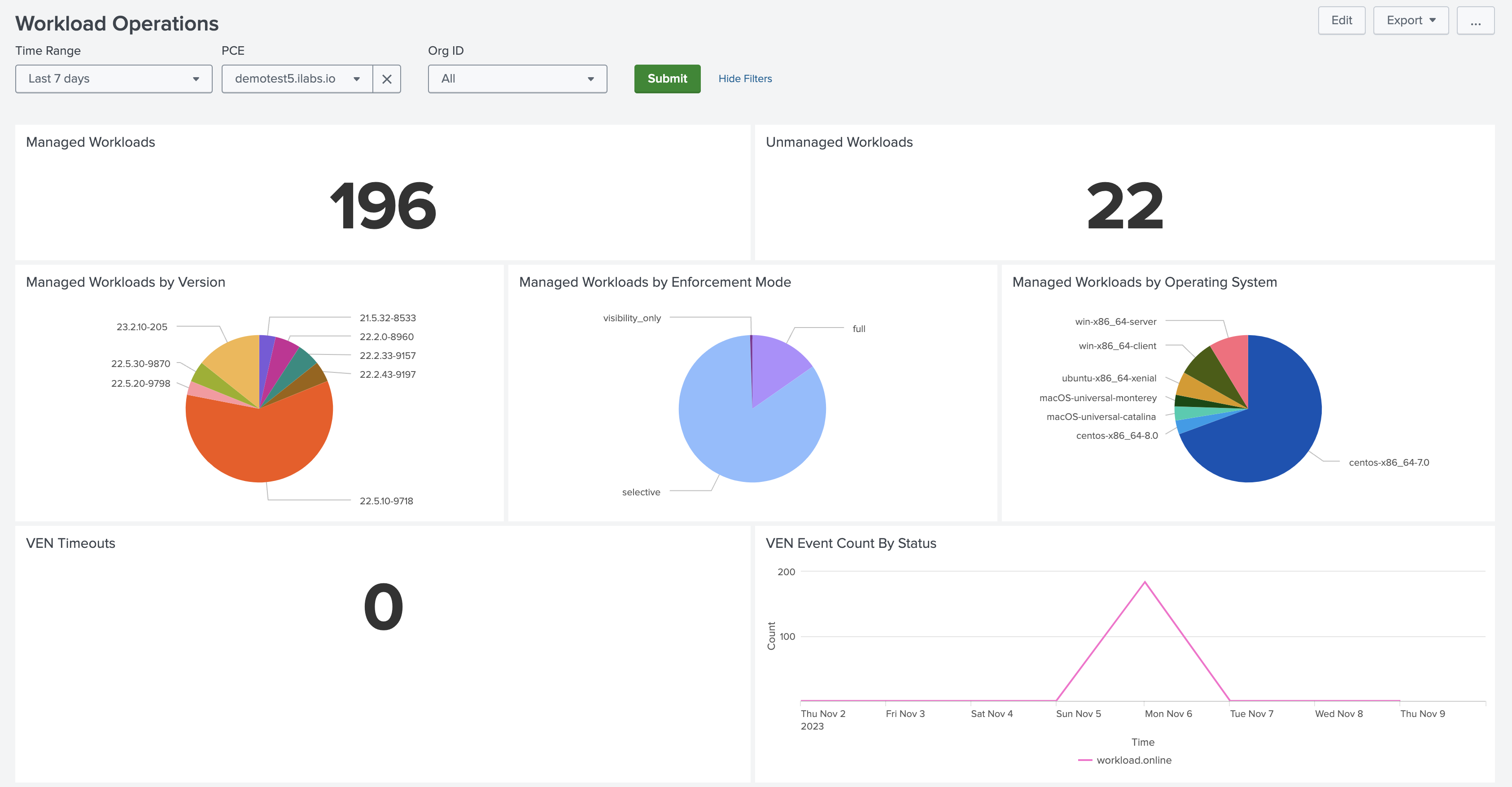
Illumio provides a breach containment and microsegmentation platform to stop lateral movement across hybrid environments. It focuses on real-time visibility and granular control of communication between workloads, devices, and cloud resources. By mapping traffic and enforcing segmentation policies, Illumio helps organizations reduce the spread of ransomware.
Key features include:
- Real-time observability: Visualizes communication and traffic across workloads, devices, and environments for risk identification.
- Granular segmentation policies: Enables fine-grained control over allowed communications to reduce unnecessary access paths.
- Breach containment capabilities: Isolates compromised systems or protects critical assets to prevent lateral movement.
- AI-powered security graph: Maps connections across environments to identify risk and enforce policies at scale.
- Unified platform management: Provides centralized deployment and control across cloud, endpoint, server, and container environments.

Source: Illumio
Network Detection and Response (NDR) Platforms
5. Darktrace

Darktrace offers an AI-native cybersecurity platform that applies self-learning AI across network, cloud, email, identity, OT, and endpoint environments. Instead of relying on predefined attack signatures, the platform learns normal behavior within each organization and identifies deviations that may indicate threats.
Key features include:
- Self-learning AI approach: Learns normal patterns within an organization to detect subtle anomalies and novel threats.
- Cross-domain coverage: Monitors network, cloud, email, identity, OT, and endpoint environments within a unified platform.
- Real-time threat detection: Identifies known and unknown threats as they occur across the enterprise.
- Autonomous response capabilities: Automatically takes action to contain or slow threats without disrupting business operations.
- AI research-driven innovation: Continuously evolves detection models to address AI-driven and emerging cyber threats.

Source: Darktrace
.webp)
6. ExtraHop Networks

ExtraHop provides a modern Network Detection and Response platform focused on deep network visibility and real-time threat detection. Its platform processes network traffic at line rate, enabling detection across high-speed environments. By combining detection, packet forensics, and performance monitoring, ExtraHop supports investigation and response workflows within security operations centers.
Key features include:
- High-speed traffic analysis: Processes network traffic at high throughput to support real-time detection in modern environments.
- Integrated NDR platform: Combines detection, packet forensics, intrusion detection, and performance monitoring in one system.
- Lateral movement detection: Identifies attacker movement across internal networks that other tools may miss.
- Cloud and hybrid environment support: Extends visibility across on-premises and cloud infrastructures.
- SOC workflow integration: Integrates with SIEM, SOAR, EDR, and other tools to support coordinated investigation and response.

Source: ExtraHop Networks

7. Gatewatcher

Gatewatcher delivers a Network Detection and Response platform focused on deep network visibility and evidence-based threat detection. Its approach emphasizes collecting and analyzing network metadata to produce reliable detection outcomes. The platform is designed to provide degree visibility across assets and network activity.
Key features include:
- 360-degree network visibility: Monitors all assets and network activity in real time to provide comprehensive situational awareness.
- Metadata-driven detection: Uses network metadata to generate reliable detection outputs rather than relying solely on alert volume.
- Deep visibility module: Offers monitoring and communication analysis across diverse environments.
- Cloud protection capabilities: Extends detection and visibility into cloud environments.
- Modular NDR architecture: Includes dedicated modules such as detection center, decision center, and sensors for flexible deployment.

Source: Gatewatcher

Extended Detection and Response (XDR) / Unified Security Platforms
8. CrowdStrike Falcon

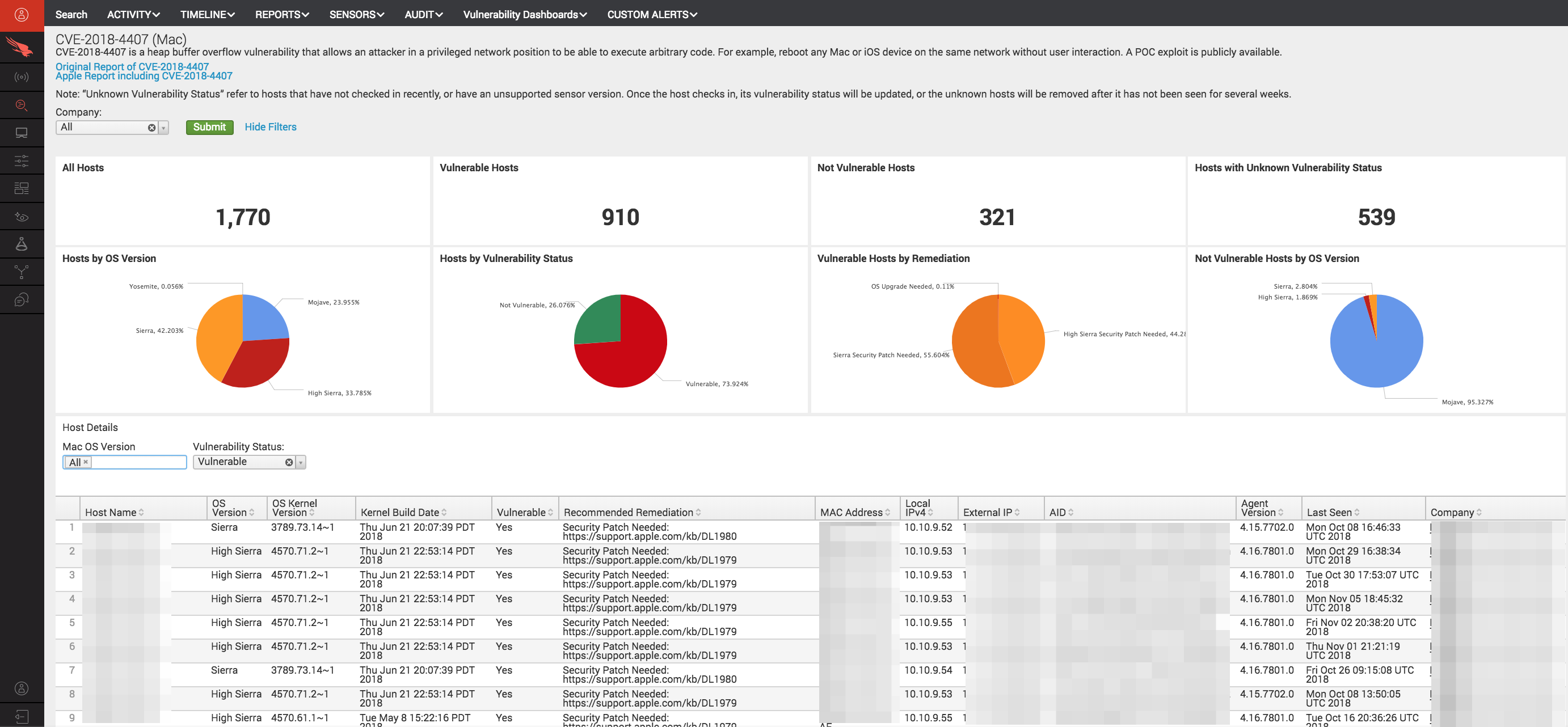
CrowdStrike Falcon is a cloud-native, AI-driven security platform that unifies endpoint, cloud, identity, and data protection within a single architecture. Built as an agentic security platform, it integrates AI agents and a centralized data layer to automate investigations and improve detection accuracy.
Key features include:
- Enterprise graph data layer: Builds a connected model of enterprise telemetry to support AI-driven detection and investigation.
- Agentic AI automation: Uses AI agents to automate analyst workflows and repetitive security tasks.
- Unified platform and console: Delivers security capabilities through a single lightweight agent and centralized console.
- Cross-domain threat detection: Protects endpoints, cloud environments, identities, and AI systems within one architecture.
- Automation and orchestration: Accelerates investigations and response through built-in automation capabilities.

Source: CrowdStrike
9. Trellix

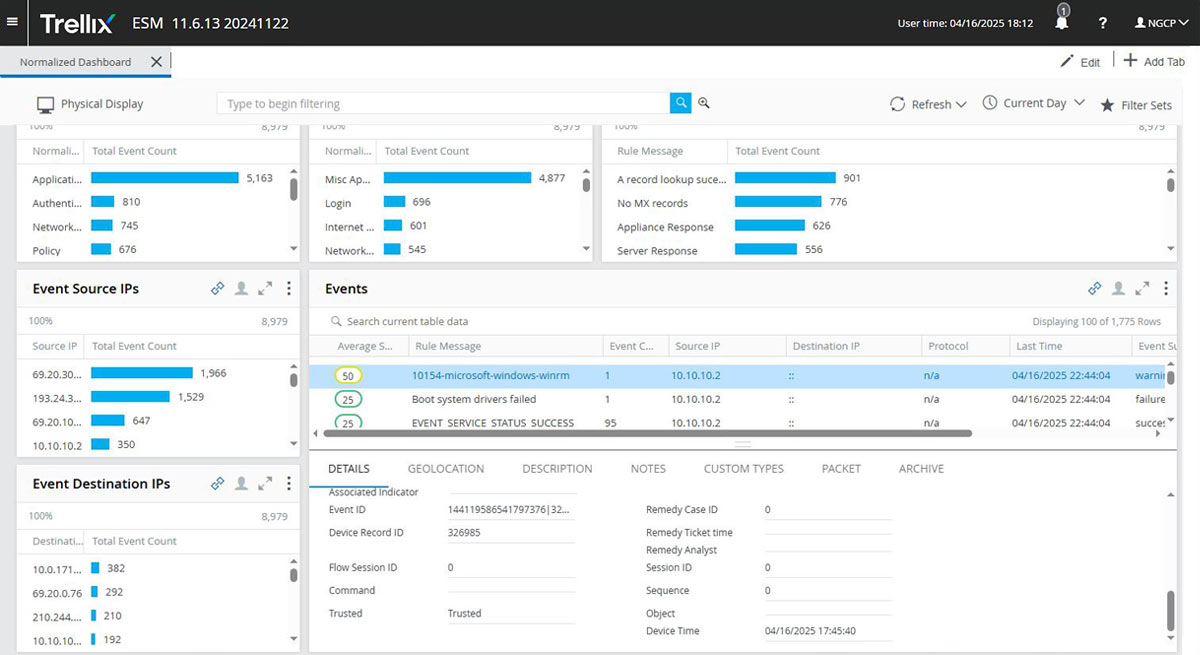
Trellix provides a broad, AI-powered security platform to support detection, response, and operational resilience across multiple environments. The platform integrates endpoint, email, network, data, and cloud security within a unified architecture. It incorporates generative and predictive AI to improve detection accuracy and simplify investigations for security operations teams.
Key features include:
- Integrated security platform: Unifies endpoint, email, network, data, and cloud controls within a single ecosystem.
- Generative and predictive AI capabilities: Applies AI to power detections, guided investigations, and threat contextualization.
- Resilient by design architecture: Supports on-premises, hybrid, cloud, and air-gapped environments.
- Single console management: Centralizes threat hunting, dashboarding, case management, and policy configuration.
- Platform-wide correlation: Correlates and orchestrates security controls and applications across the environment.

Source: Trellix
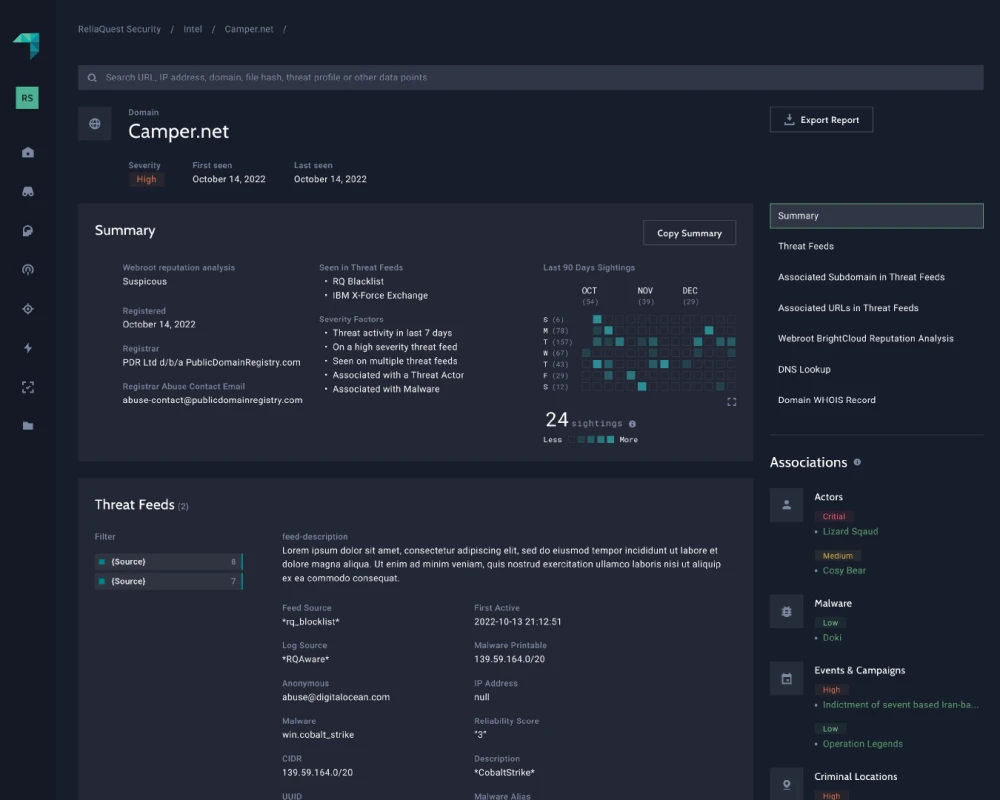
10. ReliaQuest

ReliaQuest GreyMatter is an agentic AI-powered security operations platform that integrates with existing security technologies to unify detection and response. It normalizes and correlates telemetry across tools, enabling faster threat containment and reducing manual effort. The platform focuses on automation, contextual detection, and modular integration.
Key features include:
- Universal telemetry normalization: Automatically normalizes and correlates data from multiple security tools into a unified context.
- Agentic AI teammates: Deploys role-based AI agents to automate security operations workflows and scale analyst capacity.
- At-source detection: Connects directly to source technologies to detect threats without relying on separate storage systems.
- Automated containment: Enables rapid threat containment, often within minutes, through integrated automation.
- Modular and stack-agnostic design: Integrates with existing architectures and supports multicloud and multi-SIEM environments.

Source: ReliaQuest
Conclusion
Organizations evaluating alternatives to Vectra AI are often looking for solutions that balance advanced threat detection with ease of deployment, cost-effectiveness, and operational simplicity. Modern network detection and response platforms increasingly combine AI-driven analytics, cloud-native architectures, and automation to help security teams manage complex hybrid environments. Selecting the right solution depends on an organization’s requirements for scalability, integration, and the level of visibility needed across on-premises and cloud infrastructure.