
What Is Ransomware?
Ransomware is a type of malware that encrypts a user’s files or locks their computer, demanding a ransom payment for their return. Attackers gain access through phishing emails, malicious downloads, or unpatched vulnerabilities, then use the software to encrypt data and sometimes steal sensitive information before demanding a ransom, typically in cryptocurrency. To prevent ransomware, it is crucial to be cautious online, keep software updated, and maintain regular, offline backups of your data.
Ransomware differs from other types of malware by focusing directly on extortion rather than just stealing information or causing disruptions. This tactic can target both individuals and organizations, affecting everything from personal laptops to critical infrastructure. Because criminals monetize attacks directly and efficiently, ransomware remains a popular tool for cybercriminals worldwide.
Table of Contents
ToggleEvolution and History of Ransomware
Ransomware first appeared in the late 1980s with the “AIDS Trojan,” which spread via floppy disks and demanded payment through postal mail. Early forms were relatively unsophisticated, often relying on basic encryption or fake lock screens.
The 2000s saw a rise in more variants, aided by the proliferation of the internet. These versions used stronger encryption and began targeting a broader range of victims. In 2013, CryptoLocker marked a major shift, combining strong encryption with widespread distribution via email attachments and botnets. It set the template for modern ransomware.
From 2016 onward, ransomware attacks became more targeted and disruptive. High-profile incidents like WannaCry and NotPetya exploited system vulnerabilities to spread rapidly across networks, causing global damage. Around the same time, attackers shifted to “ransomware-as-a-service” (RaaS), allowing less-skilled criminals to launch attacks using rented infrastructure.
The use of LLMs
Ransomware groups are beginning to leverage artificial intelligence (AI) and large language models (LLMs) to improve the speed, scale, and sophistication of their attacks. These tools can automate tasks that previously required manual effort, allowing attackers to operate more efficiently and target victims more effectively.
LLMs can generate convincing phishing emails with correct grammar, tone, and contextual relevance, making social engineering attacks harder to detect. They can also help craft ransom notes and negotiate with victims in real time, simulating human interaction. Some attackers use LLMs to analyze stolen data, extract valuable information, or identify sensitive targets within an organization.
The Impact of Ransomware Attacks
Ransomware attacks can cause significant financial, operational, and reputational damage to victims. The direct costs often include ransom payments, system recovery expenses, and legal or regulatory fines. However, indirect losses, such as business interruption, loss of customer trust, and long-term brand harm, can be even more severe.
Operationally, ransomware can shut down entire networks, halt production lines, disrupt healthcare services, or lock out critical infrastructure systems. Recovery can take days or weeks, during which organizations may be unable to perform essential functions.
In sectors like healthcare, finance, and public services, the stakes are especially high. Hospitals have delayed surgeries, city governments have lost access to critical data, and schools have had to cancel classes due to ransomware. In some cases, leaked data includes sensitive personal or proprietary information, triggering regulatory investigations and lawsuits.
Beyond individual victims, ransomware poses systemic risks. Attacks on supply chains or service providers can cascade through multiple organizations. This broader impact has led to increased attention from governments and international bodies, many of which now classify ransomware as a national security threat.
Common Ransomware Attack Vectors
Ransomware reaches victims through various entry points, often exploiting weaknesses in systems, software, or human behavior. Understanding these attack vectors is critical to defending against infections and minimizing risk:
- Phishing emails: The most common vector, phishing emails use deceptive messages to trick recipients into clicking malicious links or opening infected attachments. These emails often mimic trusted sources or include urgent language to provoke action.
- Remote desktop protocol (RDP) exploits: Attackers frequently target exposed RDP services with brute-force attacks or stolen credentials. Once inside, they can install ransomware directly on systems with minimal user interaction.
- Drive-by downloads: Visiting compromised or malicious websites can trigger automatic ransomware downloads. These attacks exploit browser vulnerabilities or plugins, requiring no user action beyond viewing the page.
- Malicious advertisements (malvertising): Legitimate websites sometimes serve harmful ads containing embedded code that redirects users to exploit kits. These kits then deliver ransomware by leveraging known software vulnerabilities.
- Software vulnerabilities: Unpatched operating systems, applications, or devices provide entry points for ransomware. Attackers use exploit kits or custom code to take advantage of these flaws, especially in widely-used software like Microsoft Exchange or VPNs.
- Compromised software supply chains: Attackers inject ransomware into software updates or tools from legitimate vendors. When organizations install these tampered packages, they unknowingly introduce ransomware into their environments.
- Removable media: USB drives or other portable storage devices can carry ransomware, particularly in targeted attacks. Inserting an infected device can execute the payload automatically if autorun features or social engineering tricks are used.
- Third-party services and integrations: Weaknesses in third-party applications or integrations with business systems can provide indirect access. Attackers exploit these trusted links to bypass perimeter defenses.
How Ransomware Works: Lifecycle and Targeting Tactics
Initial Access Methods Used by Threat Actors
Ransomware actors use multiple strategies for initial compromise. Phishing emails often employ malicious attachments or URLs, aiming to trick users into executing code or entering credentials. These emails are increasingly targeted (spear phishing), using information about the recipient to increase credibility. Attackers also exploit known vulnerabilities in applications and operating systems, especially when organizations delay patch deployment.
Exposed remote services, like RDP and VPNs, are frequent entry points, as attackers rely on weak passwords, misconfigurations, or stolen credentials to gain unauthorized access. Once inside a network, attackers may install remote access tools or backdoors for persistent control.
Initial compromises often go undetected since attackers use legitimate-looking administrative tools or exploit trusted supplier connections. The initial access phase is critical, as it sets the stage for further privilege escalation and lateral movement, increasing the attacker’s reach and potential impact within the compromised environment.
Privilege Escalation and Lateral Movement Patterns
After gaining an initial foothold, ransomware actors focus on increasing their access privileges. They may exploit unpatched local vulnerabilities, harvest credentials from compromised machines, or abuse misconfigured authorization settings.
Escalated privileges allow them to disable security controls, access sensitive data, and further entrench themselves within the network. Tools such as Mimikatz or built-in system utilities like PowerShell are frequently used for these purposes, helping attackers remain undetected as they map internal IT environments.
Lateral movement follows privilege escalation, enabling attackers to spread ransomware payloads to more devices and critical systems. Techniques such as pass-the-hash attacks, exploiting open administrative shares, or deploying scripts through remote management tools are common.
Data Exfiltration, Encryption, and Extortion Workflow
Modern ransomware attacks often include data exfiltration before encryption. Attackers stealthily copy sensitive data to external locations, threatening to release it publicly unless paid, a tactic known as “double extortion.” This shift aims to increase leverage, since data leaks can amplify regulatory penalties and reputational harm even if victims have robust backups.
File transfer utilities, cloud storage, and command-and-control servers enable covert data extraction during this stage. The final phase involves encrypting local and networked files, typically using strong cryptographic schemes that are practically impossible to break without unique decryption keys.
Victims receive ransom notes detailing payment instructions and deadlines, coupled with threats to escalate the attack if demands aren’t met. Attackers may also attempt to delete or deactivate backup solutions and shadow copies, making recovery harder and heightening financial and operational pressure on targeted organizations.
Key Types and Variants of Ransomware
Encrypting Ransomware
Encrypting ransomware is the most common type, using cryptographic techniques to lock files or entire systems. Upon infection, it systematically scans accessible directories and encrypts user data, often including network shares and attached storage. Ransomware variants like CryptoLocker and REvil use strong, asymmetric encryption algorithms, ensuring that accessing data without the criminals’ private key is infeasible for victims.
This variant’s effectiveness is driven by its irreversible nature; without a decryption key, recovering locked files is usually impossible without paying the ransom or having uncompromised backups. Encrypting ransomware often targets organizations due to their higher likelihood of paying and their greater exposure to business disruption.
Lock-Screen / Device-Locking Ransomware
Lock-screen or device-locking ransomware prevents access to the infected computer or mobile device by displaying an unremovable, full-screen window. This lockout is typically accompanied by a ransom message demanding payment for restoration of access. While less technically sophisticated than encryption-based variants, these attacks can halt productivity and cause panic among users unprepared for such lockouts.
Unlike encrypting ransomware, lock-screen variants usually do not affect data on the device directly, focusing instead on obstructing user operations. These attacks may target consumers more frequently than enterprises, leveraging social engineering messages (e.g., fake law enforcement warnings) to coerce payment.
Ransomware-as-a-Service (RaaS)
Ransomware-as-a-service (RaaS) is a commercial model where ransomware developers lease their malicious software to affiliates, lowering the barrier to entry for cybercrime. Affiliates receive ready-made ransomware kits and support, often paying a percentage of the proceeds to the creators. Dark web forums enable recruitment, distribution, and transaction processing, mimicking legitimate SaaS business models.
RaaS has made ransomware attacks more frequent and unpredictable, as many less-skilled actors can orchestrate large-scale intrusions with little technical expertise. This model allows attackers to focus on developing new tactics and evasion techniques, while affiliates handle delivery and victim targeting.
Platform-Specific Variants (Windows, Mobile, Network Devices)
Ransomware variants are increasingly tailored to exploit particular platforms or device types. Traditional ransomware attacks most commonly target Windows systems, leveraging widespread adoption and known vulnerabilities. However, attackers are now adapting their code for Linux servers, macOS, Android, and IoT devices.
Mobile ransomware typically employs device-locking or data encryption tactics, often distributed via malicious apps or SMS phishing. Network device ransomware can compromise routers, NAS appliances, and other infrastructure gear, seeking out weak admin credentials or outdated firmware.
Recent Examples of Ransomware Attacks
Ransomware attacks continue to evolve in scale, sophistication, and impact, affecting organizations across every industry. These are some recent higher-impact ransomware attacks:
SIAD Group (Italy): Nov 2025
Everest ransomware gang claims to have stolen 159 GB of internal data (projects, documents), threatening to leak it on its site. The company confirmed a breach.
K Club resort (Ireland): Sept 2025
Luxury resort hosting the Irish Open hit by SafePay ransomware: IT systems were encrypted, sensitive financial/IT/admin data was stolen and partially leaked.
Asahi Group (Japan): Sept/Oct 2025
Ransomware-as-a-service gang Qilin claimed an attack that temporarily halted production at six breweries in Japan; they later posted samples of alleged stolen internal documents and claimed ~27GB of data taken.
Marks & Spencer (UK): April 2025
Attacks linked to Scattered Spider / Octo Tempest and DragonForce ransomware caused ~5 days of online sales outage, with estimated impact of £3.8m per day and a market cap drop of over £500m.
Synnovis (UK): June 2024
Ransomware attack (linked to Qilin) disrupted pathology services across NHS hospitals in London for weeks; in 2025 Synnovis confirmed that patient data had been stolen and notified providers of the breach.
Change Healthcare (US): February, 2024
BlackCat/ALPHV ransomware disrupted nationwide healthcare payments and claims; over 100 million individuals were ultimately impacted, making it one of the largest US healthcare breaches ever.
Key Features of Ransomware Recovery Solutions
Immutable Backups
Immutable backups are unchangeable copies of data, protected against modification or deletion by ransomware or unauthorized users. These backups rely on write-once, read-many storage principles, ensuring data integrity even if attackers gain administrative access to the primary environment. With immutability, organizations can confidently restore clean versions of their data after an incident, drastically reducing downtime and the motivation to pay ransoms.
Implementing immutable backups must include proper retention policies, periodic verification, and strong authentication controls. This approach doesn’t eliminate the need for other defenses but serves as a critical last line of defense.
Air-Gapped or Isolated Backup Environments
Air-gapped backups are physically or logically separated from active IT environments, preventing network-based ransomware from reaching backup copies. Traditional air-gapped solutions involve removable media or offline storage devices, while more modern approaches use secure, isolated cloud repositories with restricted access.
This separation is essential for thwarting ransomware strains engineered to seek and encrypt or delete backup files on network-connected systems. In addition to physical air gaps, organizations should implement network segmentation and strict access controls to further isolate backup systems from production networks.
Continuous Data Protection (CDP)
Continuous data protection (CDP) captures and saves every change to files in real-time or near-real-time, reducing data loss between scheduled backups. CDP solutions maintain a comprehensive version history, enabling rapid recovery to any previous state before a ransomware incident.
Unlike traditional periodic backups, CDP minimizes recovery point objectives (RPOs) and supports granular file or application restoration. The value of CDP increases in high-transaction environments, such as finance or healthcare.
Malware Detection and Prevention
Effective ransomware recovery platforms include built-in malware detection and prevention features. These capabilities scan both live environments and backup data for malicious signatures, abnormal behaviors, and known ransomware patterns.
Early detection reduces the spread and potential damage, while automated remediation mechanisms can isolate infected systems and trigger backup restores as needed. Advanced solutions use machine learning to identify zero-day ransomware, flagging suspicious changes or encryption attempts. Integrating antimalware and endpoint detection technologies with backup and recovery workflows is critical for quickly containing threats.
Multi-Cloud and Hybrid Support
Modern ransomware recovery solutions must support diverse deployment architectures, including on-premises, public cloud, private cloud, and hybrid environments. Attackers increasingly exploit gaps between these environments, so backup platforms should centralize management and provide unified protection across the entire IT estate.
Multi-cloud support enhances data mobility, offering organizations flexibility in how and where they recover from an incident. Leveraging multiple providers and geographic locations can also reduce risks associated with a single point of failure or cloud platform attack, ensuring operations can resume quickly in the face of widespread compromise.
Forensic and Audit Capabilities
Comprehensive recovery platforms include forensic and audit tools that log access, changes, and restore operations. These features enable security teams to trace the origin of ransomware attacks, understand the scope of compromise, and reconstruct the attack timeline for response and reporting.
Forensic audits also help satisfy regulatory requirements, especially in heavily regulated sectors like finance and healthcare. Detailed audit trails and forensic dashboards support fast, accurate investigations and can improve future prevention strategies by highlighting exploited vulnerabilities and weaknesses.
Related content: Read our guide to ransomware solutions
Practical Best Practices for Reducing and Preventing Ransomware Attacks
Here are some of the ways that organizations can better protect themselves from ransomware.
1. Keep Software, Operating Systems, and Firmware Updated
Prompt patching and updating of all software, operating systems, and firmware closes critical vulnerabilities that ransomware often exploits for initial access or privilege escalation. Attackers routinely scan for outdated systems to find unpatched flaws. Automated patch management tools and vulnerability assessments should be implemented to minimize lag between patch release and deployment across all assets.
It’s essential to apply not just operating system updates, but also updates for third-party applications, browser plugins, and embedded device firmware. An asset inventory, routine vulnerability scans, and a documented patching schedule provide the backbone for continued protection, minimizing the risk of attackers using known exploits as easy entry points.
2. Strengthen Identity and Access Management Controls
Identity and access management (IAM) controls are foundational for preventing ransomware spread. Implementing strong, unique credentials and enforcing multi-factor authentication (MFA) greatly reduces the chance of credential compromise. Least privilege principles should guide account provisioning, ensuring users only have access to the resources essential for their roles.
In addition to strong authentication, regular reviews of account activity and privilege use are necessary to spot anomalies indicative of early-stage attacks. Disabling or closely monitoring privileged accounts, deploying password vaults, and promptly removing stale or orphaned accounts all help reduce the surface area for ransomware infiltration or escalation.
3. Train Employees to Identify Social Engineering Attempts
Employee awareness and ongoing training are critical deterrents against the phishing campaigns commonly used to deliver ransomware. Regular security awareness programs should simulate real-world attack scenarios, teaching staff to recognize suspicious messages, attachments, and links. Training should emphasize how to verify sender identity, use strong passwords, and report phishing attempts promptly.
Periodic refreshers and phishing simulations reinforce positive behaviors and keep cybersecurity top-of-mind. Awareness and vigilance at the human level can create a powerful frontline defense, blocking many ransomware threats before they reach critical systems or cause widespread damage.
4. Implement Advanced Threat Detection and Endpoint Protection
Advanced threat detection and endpoint protection platforms use machine learning, behavior analytics, and automated response to identify and stop ransomware before it spreads. Endpoint Detection and Response (EDR) tools monitor file changes, process anomalies, and network traffic, providing early warning and rapid containment. Unusual encryption activity or privilege escalation attempts can trigger automated isolation protocols, halting attacks in progress.
To maximize effectiveness, organizations should integrate threat intelligence feeds and regularly update antivirus definitions. Deploying EDR and next-generation antivirus across all endpoints, including servers, workstations, and mobile devices, ensures comprehensive protective coverage and minimizes the chance of undetected ransomware activity.
5. Harden Remote Access and Remove Unnecessary Exposures
Remote access solutions, including Remote Desktop Protocol (RDP) and VPNs, are frequent ransomware entry points. Disable unused remote access services and enforce strong authentication for all necessary connections. Network-level restrictions, such as IP allowlisting and geofencing, further reduce exposure by limiting who can connect to remote services.
Regular audits and penetration tests can reveal forgotten or misconfigured remote access ports. Organizations should deploy secure gateways, monitor remote session activity, and restrict user access by role or device type. Minimizing unnecessary exposure provides a significant barrier to attackers relying on external connectivity for initial compromise or lateral movement.
6. Validate Third-Party Security and Supply Chain Dependencies
Organizations are increasingly targeted through their suppliers and third-party integrations. Conduct regular security assessments of vendors, cloud providers, and other partners with network access or data sharing arrangements. Due diligence should include reviewing vendors’ patching practices, authentication policies, and incident response capabilities to ensure supply chain risk is minimized.
Implement contractual clauses requiring notification of security incidents, regular penetration tests, and evidence of compliance with industry standards. Organizations should also monitor third-party activity on their networks for suspicious behavior, as attackers may target weaker links to access primary targets.
Ransomware Protection with Faddom
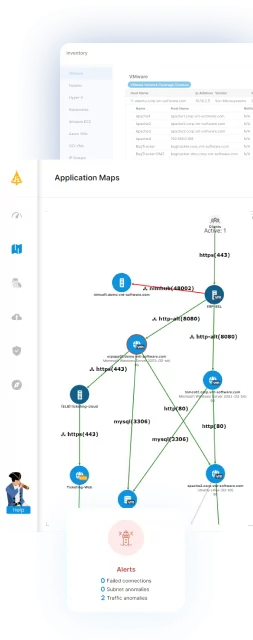
Ransomware spreads by exploiting hidden dependencies, unexpected communication paths, and poorly understood application relationships. Faddom helps organizations mitigate this risk with real-time application dependency mapping across hybrid environments, revealing exactly how servers, business applications, and services interact with each other. This visibility enables security teams to understand blast radius, validate segmentation, and identify risky exposure points before attackers can move laterally or encrypt critical systems.
By maintaining an accurate, always-updated view of dependencies and infrastructure relationships, Faddom strengthens ransomware preparedness and recovery planning. Teams can quickly assess which applications and services are affected during an incident, prioritize containment actions, and support faster, more informed response decisions without relying on outdated diagrams or manual documentation.
Fill out the form on the right to book a demo and see how Faddom improves ransomware resilience through real-time dependency visibility.