
What Is Ivanti?
Ivanti is an American IT software company providing unified endpoint management, IT service management, asset management, security, and automation solutions for enterprises. Founded in 1985, Ivanti has grown through various mergers and acquisitions, integrating brands such as LANDESK, Shavlik, AppSense, and MobileIron to build a broad IT operations and security portfolio.
Its products are used by organizations to manage, secure, and automate devices, applications, networks, and employee experiences across physical, virtual, and cloud environments.
Ivanti’s core focus lies in helping organizations modernize their IT operations by simplifying endpoint management, improving compliance, and enhancing user productivity.
The company is recognized for its suite of tools and efforts to integrate AI and automation capabilities, reducing manual workloads for IT departments. With a customer base spanning industries such as healthcare, finance, government, and education, Ivanti aims to support both large enterprises and mid-sized organizations facing complex IT management challenges.
Table of Contents
ToggleKey Ivanti Products and Solutions
Ivanti Neurons Platform
Ivanti Neurons is a unified cloud platform improving operational efficiency, security, and visibility across IT and security environments. It integrates core capabilities like analytics, automation, and agent management into a single platform experience. This allows IT teams to monitor, analyze, and act on device, user, and security data from one place.
The platform supports rapid deployment with minimal infrastructure, offering unified login and role-based access controls. Built-in AI and machine learning enhance decision-making and automate routine tasks. It also includes integration services, a centralized data model, and extensibility via APIs and marketplace connectors, making it adaptable to various enterprise needs.
Ivanti ITSM
Ivanti Neurons for ITSM delivers flexible service management across IT and other business units. It simplifies service delivery through workflow automation, self-service portals, and AI-powered chatbots. With certified service management best practices, the solution supports everything from basic helpdesk ticketing to enterprise-scale ITIL processes.
Organizations can tailor the platform using no-code tools, enabling quick configuration of workflows and interfaces. Role-based dashboards offer real-time insights into service quality and commitments. Ivanti ITSM can be deployed in the cloud, on-premises, or in a hybrid model, supporting diverse operational needs while reducing manual workloads and improving user experience.
Ivanti ITAM
Ivanti Neurons for ITAM provides lifecycle management for hardware and software assets. It offers real-time discovery, normalization, and reconciliation to maintain an accurate asset repository. The solution reduces overspend, enhances asset utilization, and supports compliance by tracking assets from procurement through retirement.
The platform integrates with service management systems to link assets with incidents and requests, improving service delivery. Features include lifecycle tracking, barcode scanning, contract and cost visibility, vendor management, and mobile access. Ivanti ITAM helps organizations reduce financial and security risks while optimizing IT investments.
Ivanti MDM
Ivanti Neurons for MDM secures and manages both corporate and personal mobile devices across iOS and Android platforms. It simplifies policy enforcement, app deployment, and device configuration through centralized profiles. Integration with Apple Business Manager and Google Zero Touch enables onboarding and provisioning.
The platform enhances mobile security with continuous threat detection using machine learning, even when devices are offline. IT teams can enforce access controls, detect compromised devices, and selectively wipe corporate data. It supports rugged device management for industries like logistics and manufacturing, helping IT scale operations while ensuring data protection.
Ivanti Secure Access Client
Ivanti Secure Access Client (ISAC) provides secure remote access to enterprise resources. It combines VPN and zero trust capabilities, enforcing identity and device compliance before granting access. With single sign-on support and integrated authentication, ISAC reduces friction for remote and mobile workers.
The client offers cross-platform support, real-time security enforcement, and centralized policy management. IT teams can monitor access activity, assess device posture, and respond to threats with automated remediation. ISAC helps organizations maintain secure connectivity while aligning with modern zero trust security strategies.
Ivanti Controversies and Incidents
In April 2021, FireEye disclosed that attackers linked to the Chinese government exploited Ivanti’s Pulse Connect Secure VPN to gain unauthorized access to U.S. and European government agencies, defense contractors, and financial firms. The intrusions relied on multiple known vulnerabilities as well as a previously unknown flaw.
The U.S. Department of Homeland Security confirmed the compromises and urged administrators to apply Ivanti’s emergency mitigations. The Cybersecurity and Infrastructure Security Agency (CISA) required federal agencies to take additional steps to secure affected systems. Investigations showed that some breaches dated back to August 2020 and involved techniques resembling earlier operations attributed to the espionage group APT5. At least five federal agencies were confirmed to have been compromised.
In January 2024, reports indicated that Chinese government hackers again exploited Ivanti software as an entry point to compromise external organizations.
Lanir specializes in founding new tech companies for Enterprise Software: Assemble and nurture a great team, Early stage funding to growth late stage, One design partner to hundreds of enterprise customers, MVP to Enterprise grade product, Low level kernel engineering to AI/ML and BigData, One advisory board to a long list of shareholders and board members of the worlds largest VCs
Tips from the Expert
In my experience, here are tips that can help you better manage, optimize, and future-proof your Ivanti deployment or migration to alternatives:
-
Segment implementation by business value, not modules:
Instead of deploying by product module (e.g., ITAM first, then ITSM), align phases with business outcomes like onboarding automation or license compliance. This builds stakeholder buy-in and delivers measurable wins faster.
-
Use Ivanti’s API layer to normalize fragmented datasets:
If you’re stuck with a mix of legacy and newer Ivanti tools, wrap data flows with a normalization layer via the API. This lets you unify CMDB, asset, and ticket data for analytics or integrations, despite backend inconsistencies.
-
Pre-model your workflow designs in BPMN before configuration:
Ivanti’s customization flexibility can backfire without clear logic. Design workflows in BPMN (Business Process Model and Notation) tools to stress-test logic before building—saves rework and keeps audit paths clean.
-
Build a governance model for config changes and automations:
Ivanti allows deep tailoring, but ungoverned customization leads to technical debt. Set up a governance framework for change approval, testing, and rollback of workflow, form, or script updates to maintain agility without chaos.
-
Leverage distributed asset discovery with subnet-level precision:
Ivanti’s asset discovery sometimes misses subnet-specific visibility. Deploy discovery probes or configure SNMP traps at subnet granularity to avoid blind spots—especially in hybrid, BYOD, or OT-heavy environments.
Key Ivanti Limitations
While Ivanti offers a range of IT management and security capabilities, users report several practical drawbacks on the G2 platform that can impact adoption, usability, and long-term efficiency:
- Complexity and overengineering: Workflows often require multiple steps compared to simpler ticketing or service management systems. Even basic functions such as full-text search or link sharing may require customization.
- Steep learning curve: Teams often need extensive training to make full use of the platform, particularly when navigating its many modules and configuration options.
- Disjointed modules: Different components can feel inconsistent in design and user experience, reflecting their origins from separate acquisitions.
- Outdated backend and APIs: Some parts still rely on SOAP rather than REST APIs, creating integration challenges. The product is undergoing rework after the Cherwell acquisition, but navigation and configuration remain cumbersome.
- Usability issues: The interface can feel cluttered, with non-native navigation elements that interfere with basic browser functions. Accessibility support is limited, and cross-browser compatibility is inconsistent.
- Customization challenges: While flexible, tailoring the platform often takes longer than expected and requires significant effort to configure workflows or extend functionality.
- Documentation gaps: Official documentation is limited in detail, leaving users to rely heavily on forums and community discussions to troubleshoot problems.
- Long and difficult implementations: Deployments can take years in some cases, even with vendor support and professional service partners, delaying time to value.
Notable Ivanti Alternatives and Competitors
1. Faddom

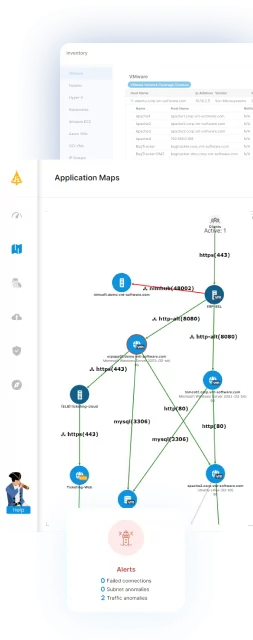
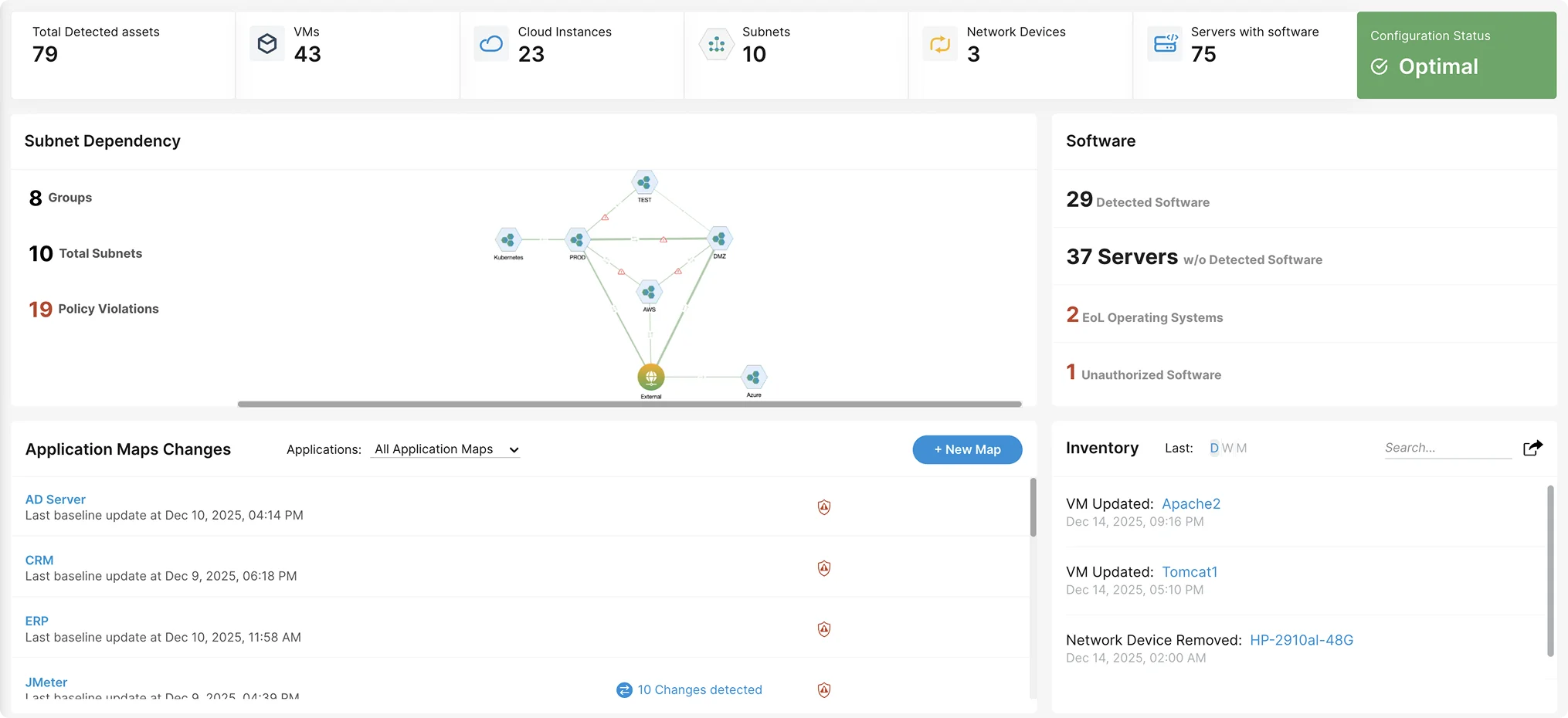
Faddom is an agentless application dependency mapping platform that gives IT teams real-time visibility into servers, applications, and communication flows across hybrid environments. It helps organizations reduce operational complexity, accelerate troubleshooting, and support IT operations with accurate dependency insights that traditional endpoint and service tools often miss.
Key features include:
- Agentless discovery: Maps applications, servers, and dependencies in under 60 minutes without deploying agents or changing firewalls.
- Real-time dependency mapping: Visualizes all upstream and downstream relationships to support incident resolution, change planning, and system stability.
- Identify unmanaged assets: Detects unknown servers, services, and communication paths that can introduce operational or security risks.
- Lightweight deployment: Runs with minimal resources and maintenance, making it simple to adopt in large or distributed environments.
- Impact-aware change planning: Demonstrates how infrastructure changes impact connected services, enabling teams to avoid disruptions and reduce troubleshooting time.
- Zabbix integration: Enhances Zabbix alerts with live dependency context to expedite root cause analysis and minimize false positives.
Want to see it in action? Book a demo with our experts!
2. Microsoft Intune

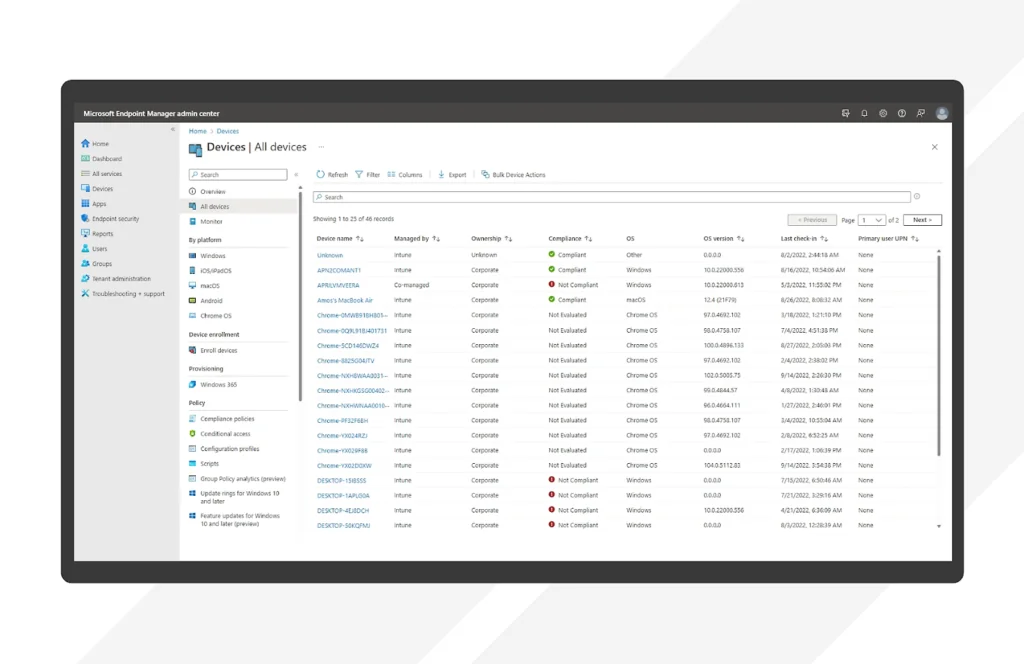
Microsoft Intune is a cloud-based endpoint management solution that helps organizations secure access to resources and manage devices, apps, and data across different platforms. It supports both organization-owned and personal devices, making it suitable for hybrid and remote work environments.
Key features include:
- Manage organization and personal devices across Android, iOS, macOS, Linux, and Windows
- Simplify app deployment, updates, protection, and access management
- Automate security, compliance, and configuration policies with internet-based delivery
- Provide self-service options for users through the Intune Company Portal
- Integrate with Microsoft Defender for Endpoint and third-party security partners for threat detection and remediation
Source: Microsoft
3. ManageEngine Endpoint Central

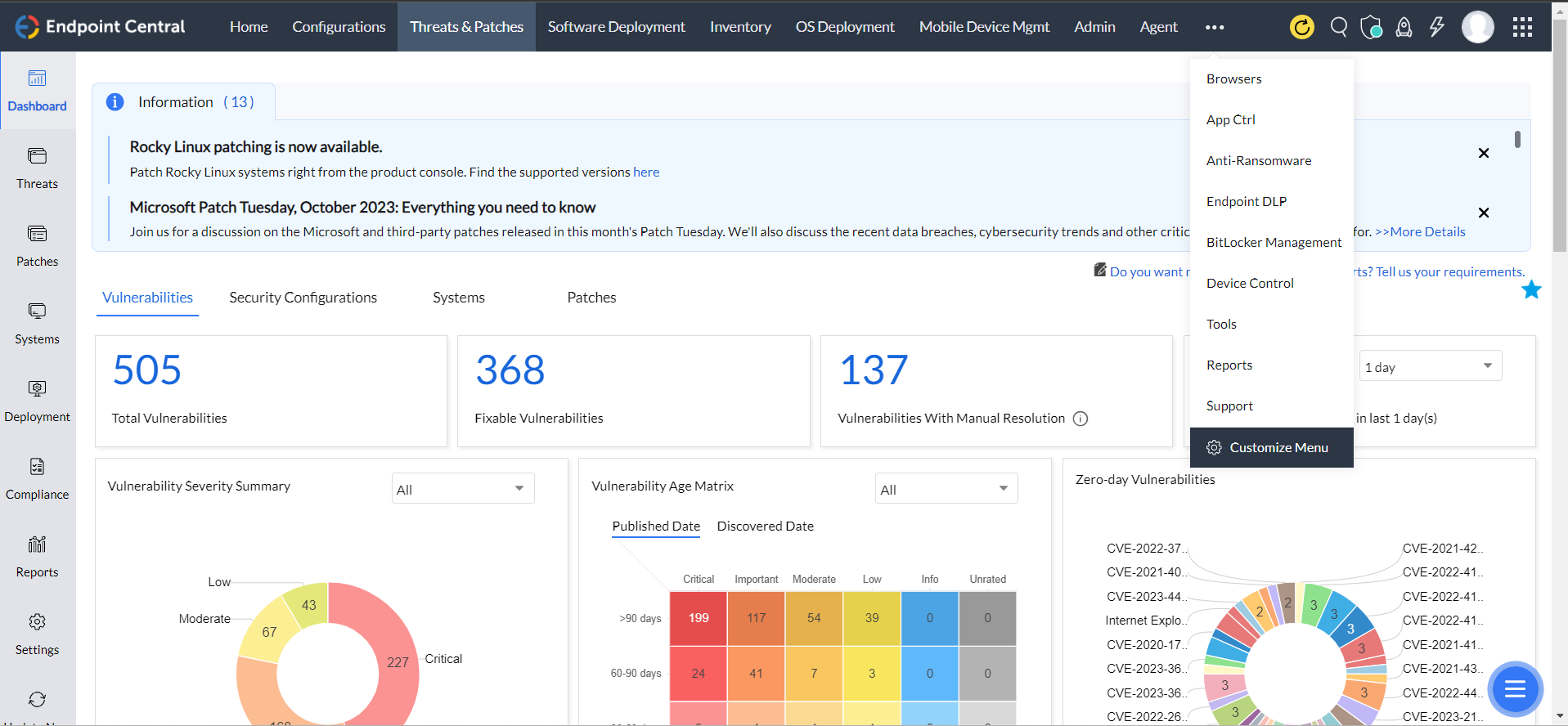
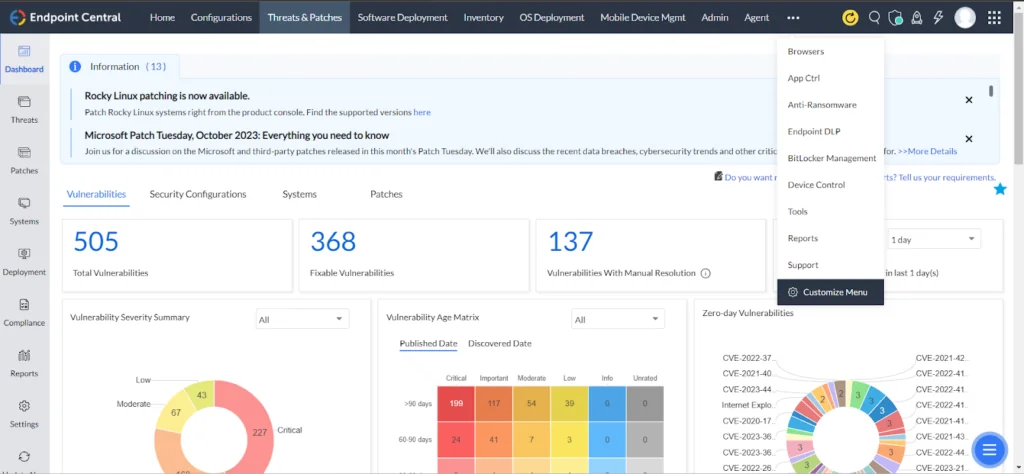
ManageEngine Endpoint Central is a unified endpoint management and security platform that consolidates IT operations into a single console. It helps organizations protect, monitor, and optimize their digital workplace by combining patching, asset intelligence, remote troubleshooting, ransomware defense, and digital employee experience management.
Key features include:
- Automate patch management for Windows, macOS, Linux, and third-party applications
- Detect and remediate vulnerabilities with continuous auditing and compliance against CIS benchmarks
- Protect against ransomware with root cause analysis, rapid incident response, and prevention controls
- Manage software and hardware assets, including license tracking, warranty monitoring, and usage analytics
- Enable mobile device management for apps, email, and content with compliance enforcement
Source: ManageEngine
4. NinjaOne

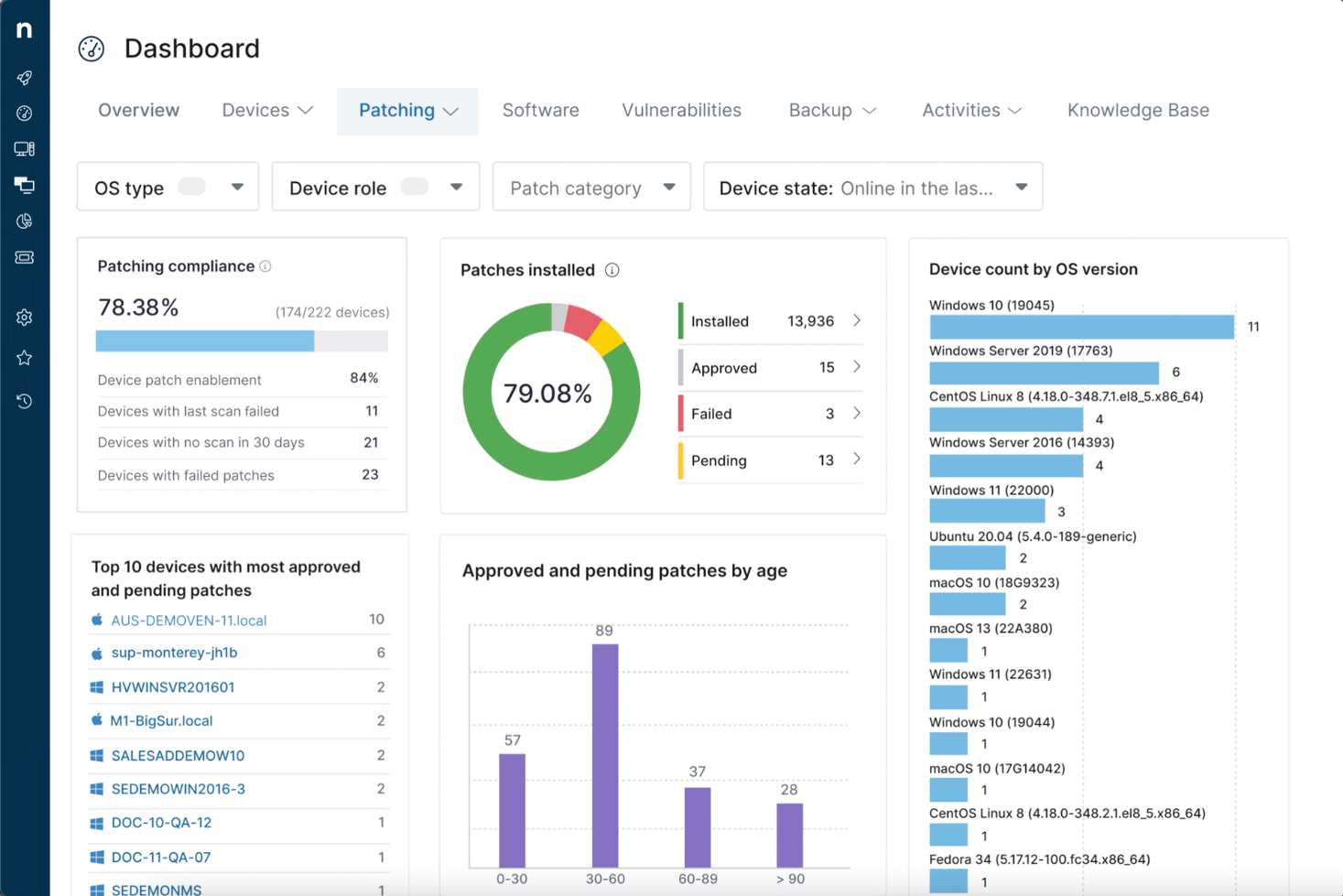
NinjaOne is a unified endpoint management platform that combines automation, visibility, and control into a single interface. It automates patching, software deployment, configuration, and issue remediation while providing real-time monitoring and remote access. The platform helps IT teams reduce manual workloads, improve device stability, and accelerate support.
Key features include:
- Automate patch management for Windows, macOS, Linux, and 200+ applications with an actionable dashboard
- Maintain full hardware and software inventories with warranty details and real-time performance telemetry
- Deploy and uninstall applications at scale with customizable software packages
- Standardize IT operations with endpoint task automation for setup, maintenance, and app installs
- Implement auto-remediation to detect and resolve endpoint issues through condition-based scripting

Source: NinjaOne
5. ServiceNow

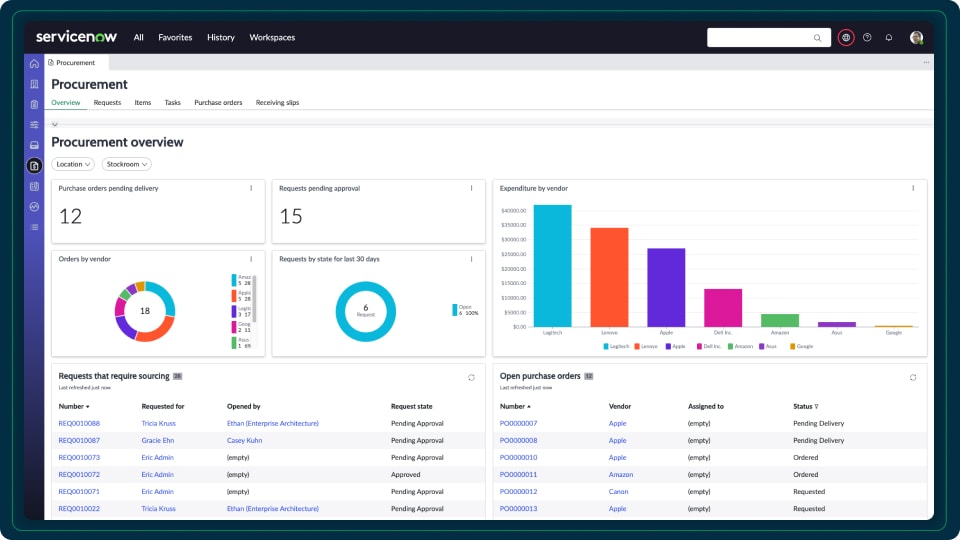
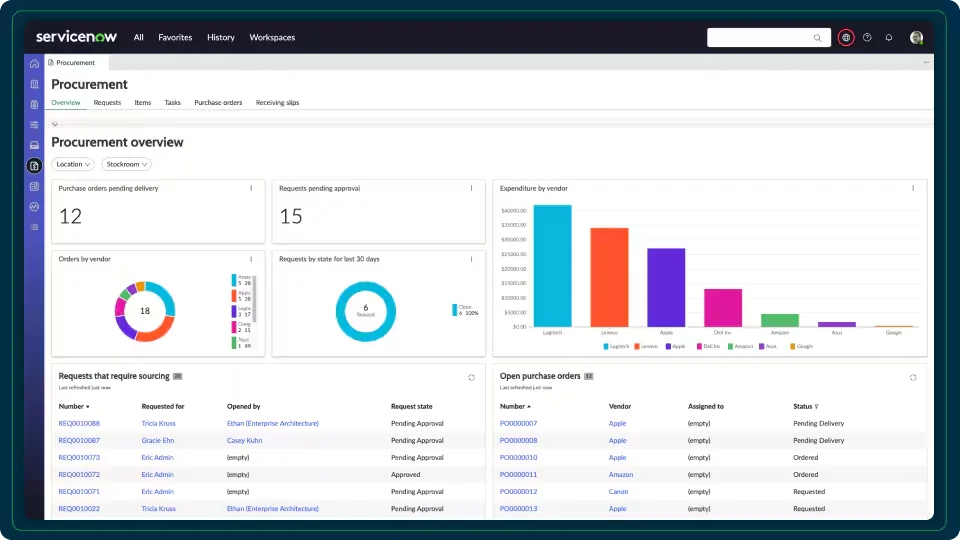
ServiceNow is an IT service management (ITSM) platform built on the ServiceNow AI Platform to automate, unify, and modernize core IT processes. It centralizes incident, problem, and change management in a single cloud-based solution with a unified data model.
Key features include:
- Automate incident, problem, and change management workflows on a unified AI-driven platform
- Use AI agents to triage incidents, eliminate recurring issues, and minimize disruptions
- Provide 24/7 IT support through self-service portals and virtual agents
- Monitor real-time performance with analytics to detect service bottlenecks and optimize response
- Improve agent productivity with guided workflows, knowledge bases, and AI-powered assistance
Source: ServiceNow
Learn more in our detailed guides to:
- Ivanti competitors (coming soon)
- Ivanti vs ServiceNow (coming soon)
Conclusion
Ivanti delivers a broad suite of IT management and security solutions, but its complexity, integration challenges, and long deployment times mean it may not fit every organization. When considering alternatives, it is essential to align technology choices with operational goals, existing infrastructure, and team capabilities. A careful evaluation of usability, scalability, and long-term maintenance needs can help ensure that the chosen platform improves efficiency without introducing unnecessary overhead.