What Is Ivanti Asset Management?
Ivanti Asset Management is an IT asset management (ITAM) solution to help organizations gain visibility and control over their hardware and software assets. It functions as a centralized platform to track the lifecycle of IT assets from procurement through retirement.
Ivanti combines inventory management, asset tracking, license compliance, and financial optimization in a single system. This is useful for organizations aiming to reduce costs, mitigate risks from unlicensed software, and maximize return on investment from their IT assets.
The platform is typically used by IT departments to automate asset discovery, track requests, and generate compliance reports. Ivanti Asset Management integrates with other Ivanti products, such as service management and endpoint security solutions, allowing for better coordination across IT operations.
By maintaining a CMDB (configuration management database), Ivanti ensures that asset information is always up-to-date, supporting decision-making processes like hardware refresh planning, audit preparation, and contract negotiations.
Key Features of Ivanti Asset Management
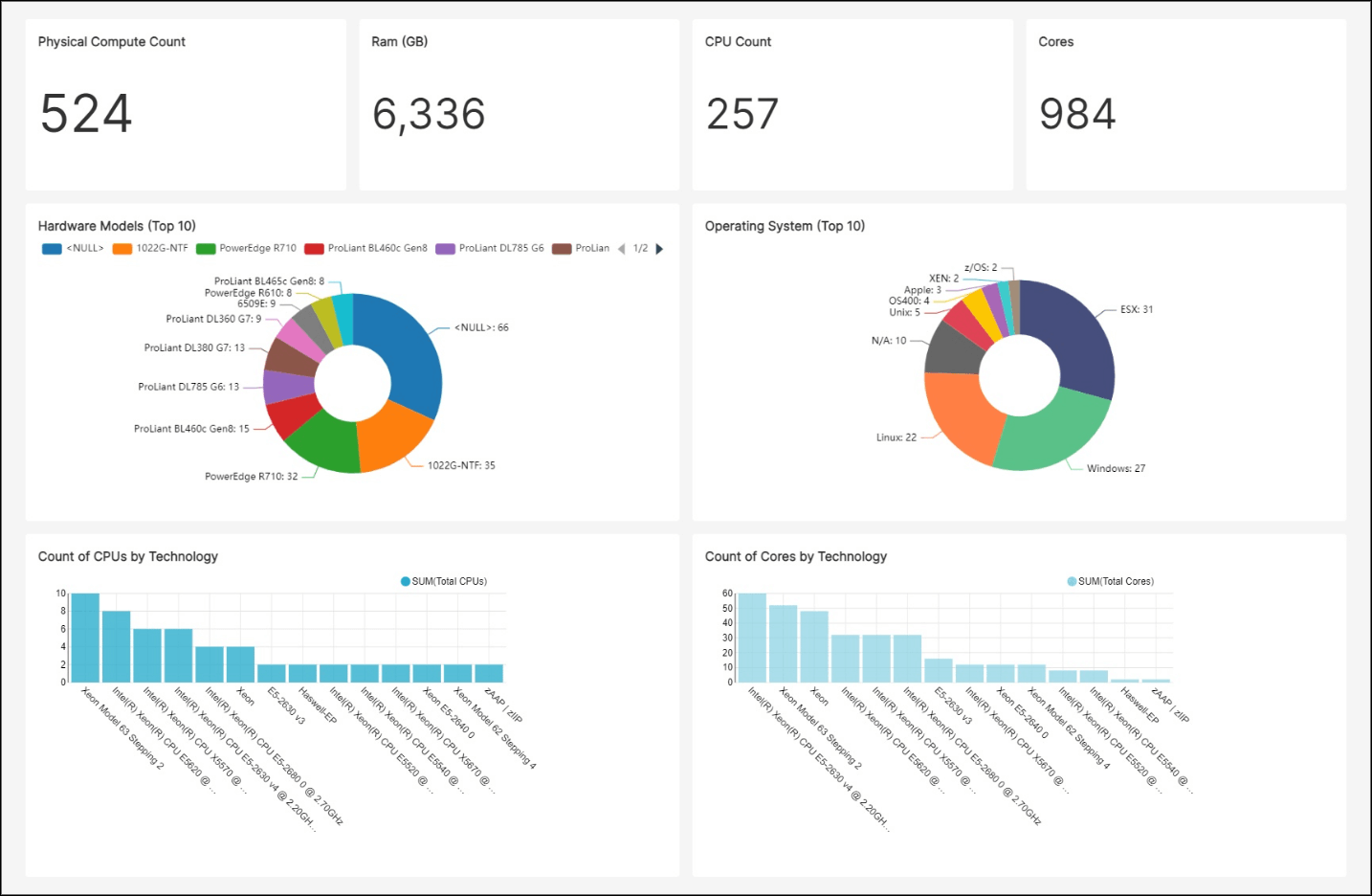
Ivanti Asset Management, powered by Ivanti Neurons for ITAM, provides capabilities for tracking and managing IT assets throughout their lifecycle. It offers visibility, control, and automation tools that help organizations reduce costs, optimize asset use, and improve operational efficiency. The platform supports both cloud and on-premises deployments and integrates with service management systems for operations.
Key features include:
- Full lifecycle tracking: Manage assets from procurement through to disposal, including purchase orders, invoicing, deployment, and retirement.
- Centralized asset repository: Maintain detailed records of assets including identification data, lifecycle status, stock levels, location, and warranty information.
- Product catalog management: Gain visibility into assigned assets, inventory levels, and outstanding orders.
- Cost and contract visibility: Monitor IT spending, track asset depreciation, and manage contracts to support decision-making and contract negotiations.
- Barcode scanning support: Accelerate data entry and tracking by scanning asset barcodes to update or retrieve asset information quickly and accurately.
- Vendor management tools: Maintain vendor details and performance metrics through scorecards.
- Real-time discovery and reconciliation: Automatically discover assets, normalize data, and populate the asset repository with accurate, actionable information.
- Mobile asset management: Use the mobile app to locate, update, or manage assets remotely, including triggering quick actions and checking for related incidents.
- CMDB integration: Connect with a service management CMDB to ensure asset data is current and aligned across IT systems.
- Cloud and on-premises deployment: Available as a secure cloud-based service (ISO 27001 certified) or for on-premises environments.
- Automation capabilities: Automate routine tasks and processes across the IT environment to reduce manual work and improve efficiency.
- Battery monitor bot: Monitor device battery health proactively to schedule maintenance or replacements before failures occur.
- Reporting and dashboards: Generate clear, visual reports and dashboards to support asset analysis and decision-making.
Related content: Read our guide to Ivanti CMDB (coming soon)
Ivanti Asset Management Plans and Editions
Ivanti offers different solution plans that combine asset management with broader service management capabilities. These plans scale with business needs and extend beyond IT to support enterprise-wide processes.
ITSM Professional
This plan delivers the core foundation of IT service and asset management. It includes modules for service delivery, incident, change, request, and event management, as well as configuration and knowledge management. Additional features cover service level management, runbook automation, reporting, self-service, and omni-channel access. IT asset management is included with asset discovery and spend optimization.
ITSM Enterprise
Enterprise builds on Professional by adding support for non-IT functions. It extends service management to HR, facilities, and project and portfolio management (PPM). Governance, risk, and compliance (GRC) capabilities, along with security operations management, are also included.
ITSM Premium
Premium focuses on modernizing service delivery with intelligent features. It adds AI-guided service management, proactive service capabilities, and digital experience monitoring.
ITSM Enterprise Premium
This is the most comprehensive plan, combining everything from Professional, Enterprise, and Premium. It provides a complete service and asset management platform for organizations seeking fully connected and intelligent operations.
Limitations of Ivanti Asset Management
While Ivanti Asset Management provides lifecycle tracking and integration capabilities, users have reported several drawbacks that can affect daily operations and overall usability. These issues range from performance slowdowns to limitations in cloud availability and support access. These limitations were reported by users on the G2 platform.
Key limitations include:
- Limited cloud offering: Lacks full cloud-based service options that many competitors provide.
- Support restrictions: Round-the-clock support is only available with the premium plan.
- Performance issues: System can be slow, with frequent session cuts, long login times, and occasional crashes.
- Browser compatibility: May present problems with specific web browsers.
- Concurrent user delays: Performance often slows when multiple users work in the cloud at the same time.
- Ticketing friction: Some tickets require mandatory fields to be filled before saving, which can slow down high-volume work.
- Search limitations: Searching for assets or incidents can be difficult unless the exact details are entered; some items only appear when queried by asset tag.
- Feature gaps in web version: The web interface lacks certain features available in the client version.
Notable Ivanti Asset Management Alternatives and Competitors
1. Faddom

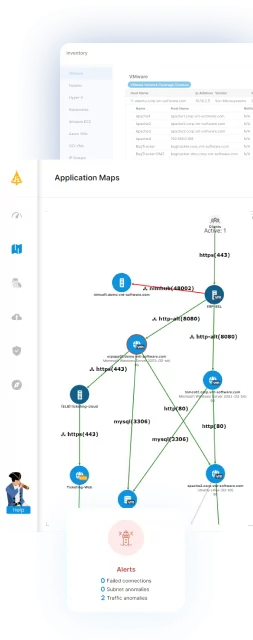
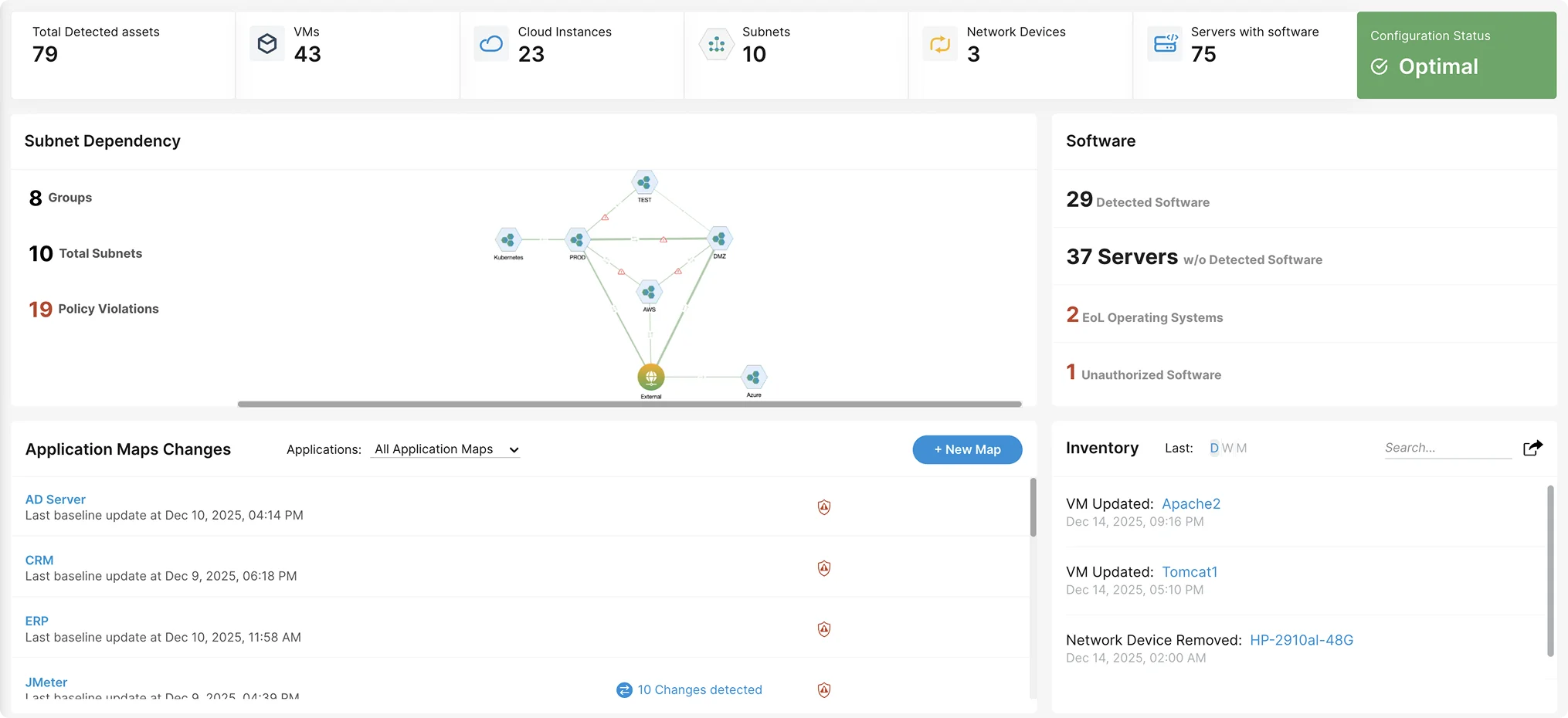
Faddom is an agentless application dependency mapping platform designed to enhance ITAM and CMDB initiatives by providing continuous, real-time visibility across hybrid and multicloud environments. It automatically discovers servers, applications, and all dependencies between them, ensuring that asset repositories remain accurate, complete, and aligned with reality. By eliminating the need for manual data collection and addressing blind spots, Faddom enhances lifecycle management, compliance efforts, and operational efficiency for any ITAM strategy.
Key capabilities include:
- Agentless, continuous discovery: Map servers, business applications, and dependencies without agents, firewalls, or causing network disruption.
- Accurate CMDB enrichment: Automatically feed up-to-date configuration and relationship data into your CMDB for clean, reliable asset records.
- Real-time dependency mapping: Gain insights into upstream and downstream connections to support incident resolution, change planning, and lifecycle decisions.
- Hybrid and multicloud coverage: Maintain full visibility across on-premises, virtual, and cloud environments in one place.
- Impact insights for ITAM: Identify unused systems, shadow IT, and risky configurations that affect asset lifecycle, compliance, and budgeting.
- ServiceNow integration: Sync accurate maps and CI data with ServiceNow to enhance ITAM, CMDB, and ITSM processes.
Ready to improve accuracy and eliminate blind spots? Fill out the form on the right to book a demo!
2. ServiceNow ITAM
ServiceNow IT Asset Management is an enterprise solution to automate and optimize the lifecycle of IT assets, covering hardware, software, and cloud resources. It enables organizations to control capital and operational expenses, reduce risks tied to licensing and contracts, and simplify workflows through automation.
Key features include:
- Software asset management: Modernizes license tracking and usage to reduce overspending and maintain compliance.
- Hardware asset management: Monitors and manages hardware and consumables to minimize risk and costs.
- Enterprise asset management: Extends lifecycle control to all enterprise assets with automation across CapEx and OpEx.
- SaaS license management: Provides insight into SaaS usage and costs for better optimization.
- Executive dashboard: Consolidates visibility of hardware, software, and cloud assets for decision-making.
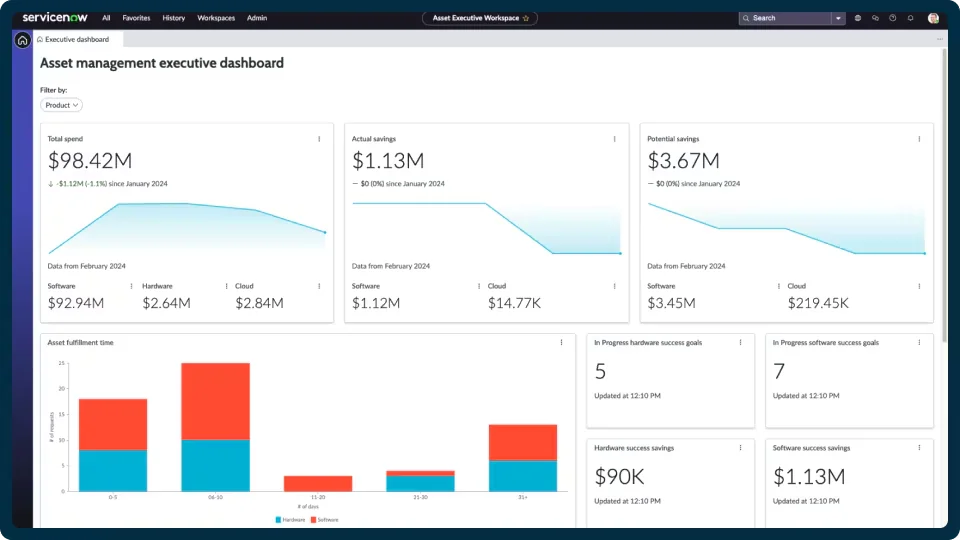
Source: ServiceNow
3. Freshservice ITAM

Freshservice IT Asset Management combines asset visibility, lifecycle automation, and AI-powered service operations. It provides discovery across on-premises, cloud, and SaaS environments, ensuring IT teams maintain an accurate inventory and reduce risks tied to shadow IT and untracked assets.
Key features include:
- Discovery and visibility: Use agentless and agent-based tools to discover assets across hybrid environments, maintain audit-ready inventories, and track assets with barcode or QR codes.
- Multi-source CMDB: Visualize dependencies and service connections with a 360-degree CMDB to prevent disruptions, support root-cause analysis, and improve change management.
- Unified lifecycle management: Manage assets from procurement to retirement, including automated onboarding, provisioning, and vendor management, with lifecycle alerts and bulk updates.
- AI-powered insights: Freddy AI surfaces past incident data, suggests resolutions, and provides proactive insights to speed up issue resolution and reduce downtime.
- Purchase order and vendor management: Track purchases, approvals, and vendor relationships.
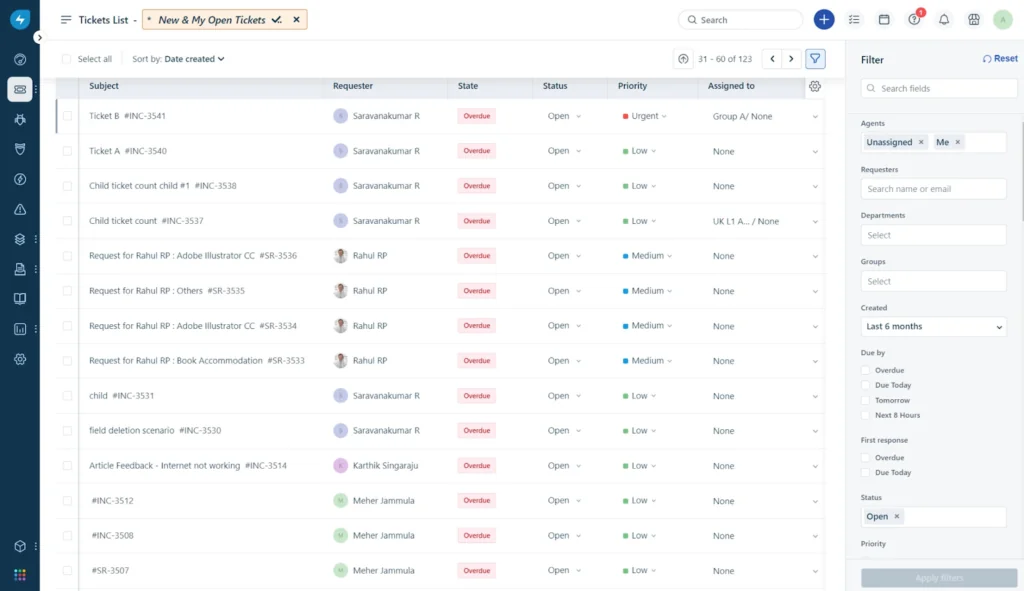
Source: Freshservice
4. Lansweeper ITAM
Lansweeper IT Asset Management focuses on solving the visibility gap across IT environments by delivering a centralized and continuously updated inventory. It discovers and catalogs IT, OT, IoT, and cloud assets, creating a single source of truth for asset data. This asset intelligence helps organizations cut costs, ensure compliance, and improve lifecycle management.
Key features include:
- Automated asset discovery: Continuously scans IT, OT, IoT, and cloud environments to eliminate blind spots and maintain an always-accurate inventory.
- Centralized asset repository: Consolidates hardware and software data into a single source of truth to reduce silos and manual tracking errors.
- Hardware asset management: Captures specifications and real-time status of hardware, supporting proactive maintenance and efficient allocation.
- Software asset management: Tracks deployments, identifies unused licenses, and ensures compliance to reduce overspending and avoid penalties.
- Lifecycle management: Monitors assets from procurement through retirement with warranty tracking, upgrade planning, and budget forecasting.
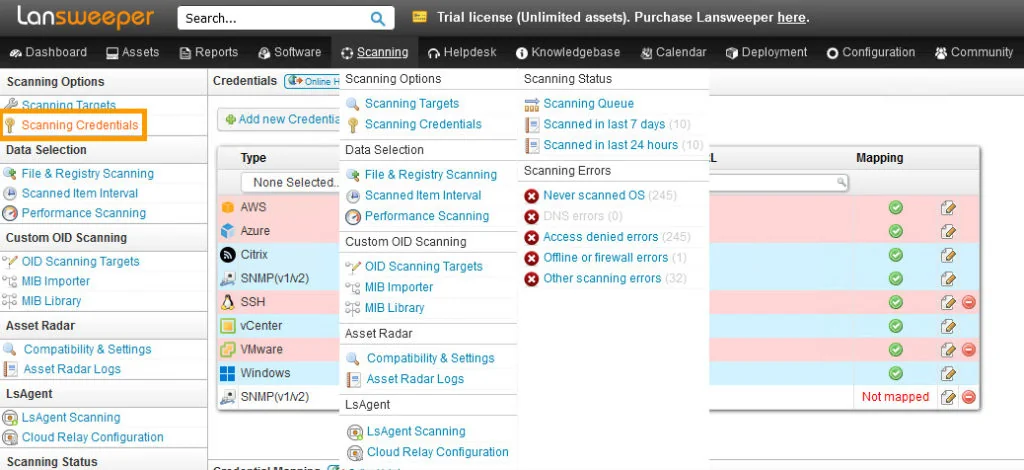
Source: Lansweeper
5. Device42 ITAM

Device42 IT Asset Management provides a configurable solution for tracking IT assets across physical, virtual, and cloud environments. It offers auto-discovery, relationship mapping, and lifecycle tracking, feeding into an integrated CMDB.
Key features include:
- Continuous auto-discovery: Uses agentless and agent-based methods with multiple protocols (SNMP, WMI, SSH, IPMI, etc.) to discover assets across hybrid infrastructures.
- Hardware inventory: Documents physical and virtual assets with specifications, configurations, and lifecycle data, including blades, switches, and clusters.
- Software inventory: Tracks deployed software, license usage, expiration dates, and prohibited applications to reduce risk and maintain compliance.
- Dependency and relationship mapping: Visualizes operational dependencies between assets, applications, and services, enabling impact analysis and faster root-cause resolution.
- QR codes and mobile support: Generates QR/barcodes and allows smartphone-based scanning for fast inventory management and audits.
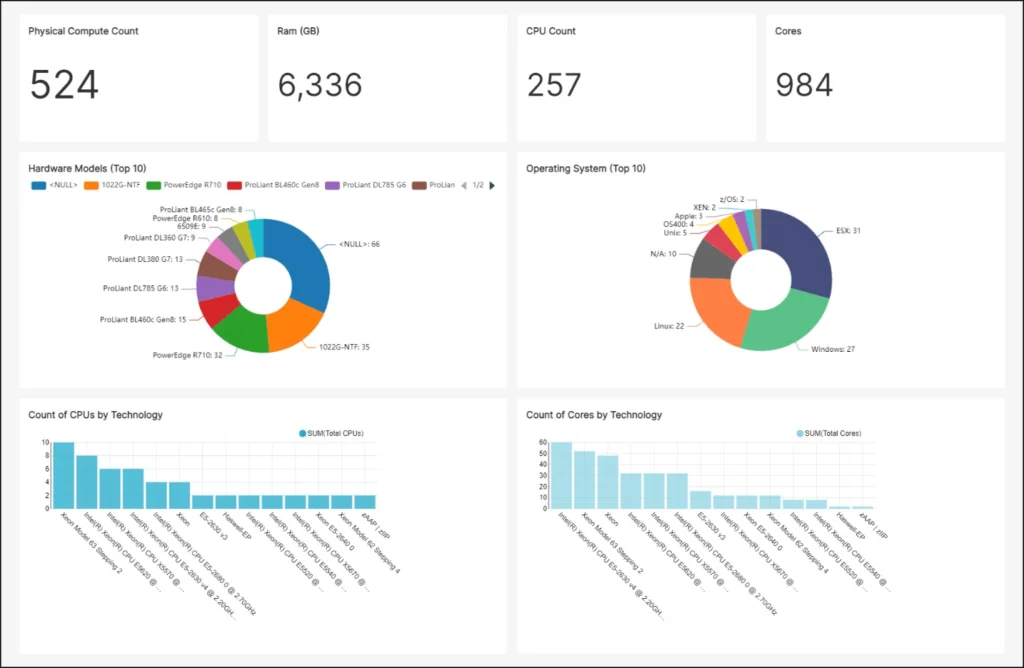
Source: Device42
Conclusion
IT asset management platforms provide organizations with the structure and automation needed to control costs, ensure compliance, and extend the value of their technology investments. By maintaining accurate, real-time visibility of assets across the enterprise, these solutions reduce risk, improve decision-making, and support smoother IT operations. As businesses scale and adopt hybrid environments, robust ITAM capabilities become essential for sustaining efficiency and governance throughout the asset lifecycle.