
What Is IT Asset Disposition (ITAD)?
IT asset disposition (ITAD) is the process of securely and responsibly managing the end-of-life cycle of IT equipment, including reusing, recycling, or destroying it. This process is critical for protecting sensitive data, ensuring legal and environmental compliance, and potentially recovering value from retired assets. It involves securely erasing data, refurbishing or reselling functional equipment, and recycling or disposing of unusable hardware in an environmentally friendly way.
Key components of ITAD include:
- Data destruction: Securely erasing all sensitive data from devices to prevent data breaches and comply with regulations. This can involve certified data wiping or physical destruction of media.
- Asset recovery: Reusing, refurbishing, or reselling functional equipment to recoup costs.
- Responsible recycling: Processing unusable equipment to safely dispose of hazardous materials and recycle valuable components like precious metals.
- Logistics and reporting: Managing the physical removal, transportation, and providing auditable reports for compliance and sustainability tracking.
This is part of a series of articles about IT Asset Management
Table of Contents
ToggleWhy ITAD Is Critical Today
Rapid tech turnover, evolving data privacy regulations, and growing sustainability expectations have made ITAD a core function for responsible and compliant IT management:
- Data security and privacy: As cyber threats increase, proper data destruction during device disposal is essential to prevent data breaches. ITAD ensures sensitive data is wiped or destroyed according to industry standards.
- Regulatory compliance: Regulations such as GDPR, HIPAA, and various state laws impose strict data handling and disposal requirements. ITAD programs help organizations meet these obligations and avoid legal penalties.
- Environmental responsibility: E-waste is one of the fastest-growing waste streams globally. ITAD promotes recycling and reuse, reducing landfill contributions and supporting sustainability goals.
- Asset recovery and cost reduction: ITAD can recover value from retired assets through resale or reuse, helping offset new technology costs and improving ROI on hardware investments.
- Risk mitigation: Improper disposal of IT assets can lead to data leaks, reputational harm, and compliance failures. A documented ITAD process minimizes these risks and ensures accountability.
- Operational efficiency: By formalizing end-of-life asset procedures, ITAD reduces internal workloads, simplifies decommissioning, and ensures consistent handling across departments or locations.
Key Components of ITAD
Data Destruction
Data destruction is the most critical aspect of ITAD, addressing the elimination of all data on devices to prevent breaches after an asset leaves the organization’s control. Secure data destruction can involve overwriting data, degaussing magnetic storage, or physically destroying the media. Standards such as NIST SP 800-88 define proper methods for sanitizing drives and other storage devices, ensuring sensitive information is irretrievable.
Verification and certification of data destruction are essential. Many reputable ITAD vendors provide certificates of data destruction for each asset, documenting the process and serving as proof of compliance. This documentation helps organizations demonstrate regulatory adherence and reduces the risks linked to data leakage from disposed devices.
Asset Recovery
Asset recovery is the process of extracting residual monetary value from retired IT assets. Hardware that is no longer needed may be refurbished and resold, leased to other organizations, or donated to charities. Effective asset recovery helps reduce the total cost of ownership by maximizing returns on investments through resale channels approved by the organization.
ITAD programs evaluate each device’s condition and market value. Devices with reusable components are harvested and redeployed, while others are routed for resale or secure recycling. Accurate recordkeeping and transparent tracking during recovery help organizations realize the potential of their IT budgets and support sustainability by reducing electronic waste.
Responsible Recycling
Responsible recycling deals with the environmentally compliant disposal of devices that cannot be reused or resold. E-waste contains hazardous substances like lead, mercury, and lithium, requiring adherence to standards such as R2 (Responsible Recycling) or e-Stewards for safe handling. ITAD programs ensure these materials are managed through certified recyclers, reducing environmental harm and liability.
Proper recycling practices include dismantling devices, separating hazardous elements, and ensuring components enter appropriate recycling streams. Detailed, auditable reports should be provided for all recycled assets, confirming regulatory compliance and supporting organizations in their sustainability and CSR reporting.
Logistics and Reporting
Logistics in ITAD covers the secure transportation and tracking of assets from decommissioning through disposition. Chain-of-custody controls, such as asset tagging, sealed containers, and real-time tracking, prevent equipment loss or tampering in transit. Vendors may provide GPS-monitored vehicles and secure packaging to ensure safe, auditable transfer.
Reporting is integral to ITAD, offering detailed documentation of every asset processed, its final status, and proof of compliance at each step. Thorough reporting supports transparency and audit readiness, giving organizations detailed visibility into the disposition lifecycle and serving as evidence during regulatory reviews or internal audits.

Lanir specializes in founding new tech companies for Enterprise Software: Assemble and nurture a great team, Early stage funding to growth late stage, One design partner to hundreds of enterprise customers, MVP to Enterprise grade product, Low level kernel engineering to AI/ML and BigData, One advisory board to a long list of shareholders and board members of the worlds largest VCs
Tips from the Expert
In my experience, here are tips that can help you better execute IT Asset Disposition (ITAD) securely, efficiently, and strategically:
-
Track asset entropy and initiate auto-deprecation signals: Use telemetry and usage analytics to automatically flag idle or underutilized assets for decommissioning. Proactive identification reduces asset sprawl and minimizes risk from forgotten devices still holding sensitive data.
-
Digitally watermark wiped drives for future auditability: Apply cryptographically verifiable markers post-erasure to prove devices were sanitized, even if certificates are lost. This adds an immutable audit trail in case of future legal or regulatory inquiries.
-
Establish ITAD decision trees based on asset risk and value: Not all devices require the same process. Create dynamic ITAD workflows where high-value or high-risk assets (e.g., storage nodes, medical devices) follow enhanced destruction paths, while low-risk ones can go through resale or donation channels.
-
Create a digital “chain of custody twin” for each asset: Mirror the asset’s journey in a secure ledger or CMDB: tracking location, handler, status, and timestamps. This digital twin enhances auditability, ensures no steps are skipped, and detects anomalies (e.g., detours, time gaps).
-
Pre-stage ITAD response kits at distributed edge sites: Equip remote or edge locations with secure destruction and packaging kits to accelerate the ITAD process without waiting for centralized logistics. This supports scalability and responsiveness in decentralized environments.
Types of Assets Covered by IT Asset Disposition
Physical Hardware
Physical hardware in ITAD typically encompasses desktops, laptops, servers, networking gear, printers, and mobile devices. Each asset type presents unique disposition challenges, such as hard drive sanitization, safe removal of embedded storage, or dismantling of multi-component devices. ITAD processes ensure all hardware is evaluated for reuse potential, recovery, or compliant recycling.
Proper asset tagging and inventory control simplify hardware tracking and verification. Devices are often serialized to enable detailed reporting and evidence that every item, regardless of form factor or complexity, is handled to meet regulatory and policy requirements.
Software and Licenses
Software and licenses are often overlooked but important elements in asset disposition. Organizations need to account for all software installations and subscriptions tied to decommissioned hardware, ensuring removal, reallocation, or proper deactivation in line with license agreements to minimize costs and avoid legal exposure from unlicensed usage.
Outdated or unused software should be removed, and license keys recovered or reassigned where permissible. Maintaining accurate software asset management during ITAD helps optimize licensing renewals and reduces unnecessary software spend.
Learn more in our detailed guide to IT asset management software
Data Storage
Data storage assets include hard drives, SSDs, tapes, optical discs, SD cards, and backup appliances. These components store large volumes of sensitive information and require stringent data sanitization before retirement. Specialized ITAD services use certified processes to eradicate or destroy stored data, ensuring regulatory compliance and that no retrievable data remains.
Proper procedures may involve overwriting, cryptographic erasure, shredding, or degaussing, depending on media type. Each storage asset should have a documented destruction process, with custody logs showing the device from identification through final destruction or verified sanitization.
Key Steps and Process Flow for ITAD
Here’s an overview of the typical ITAD process.
1. Planning and Policy Development
The ITAD process starts with planning and policy development, defining organization-wide standards for asset handling, security, and compliance. In this phase, organizations outline target objectives, required procedures, and roles for every stakeholder involved, including IT, security, and compliance teams.
Effective planning incorporates current legal requirements, corporate governance standards, and industry best practices. Documented policies serve as the foundation for consistent ITAD execution, specify approved vendors, and set guidelines for chain-of-custody, data destruction, and audit practices.
2. Inventory and Assessment
Once a policy framework is in place, accurate inventory and assessment of all IT assets earmarked for disposition is critical. This involves cataloging device specifications, serial numbers, software installations, history of use, and physical condition. The goal is to establish a complete, up-to-date record of every asset slated for disposal.
Assessment determines the most suitable disposition route for each asset (reuse, resale, donation, recycling, or destruction) based on current market value, security needs, and regulatory requirements. Thorough assessment ensures no devices are overlooked and that every item receives the right handling.
3. Data Sanitization and Destruction
Data sanitization and destruction form the heart of ITAD’s security function. This step uses validated protocols for overwriting, erasing, or physically destroying data storage media so information cannot be reconstructed or accessed post-disposal. Organizations follow standards such as NIST SP 800-88 to confirm complete eradication of sensitive data.
After sanitization, verification is essential. Many organizations require third-party audits or certificates of destruction to confirm compliance. These records are kept for regulatory defense and internal assurance that data risks are fully mitigated.
4. Disposition Decision
Disposition decisions determine the appropriate end-of-life path for each asset. Possible outcomes include secure resale, redeployment within the organization, donation to third parties, or responsible recycling and destruction of non-functioning equipment. These decisions are informed by asset condition, business needs, financial returns, and environmental considerations.
Documentation of every decision is necessary for audit trails and compliance. Each asset’s final disposition, including transfer of ownership or destruction, is recorded, ensuring organizations maintain control and traceability until the process concludes.
5. Logistics and Transportation
Secure logistics are vital in ITAD to prevent loss, theft, or tampering with assets in transit. Specialized transport arrangements, such as locked containers, GPS-enabled vehicles, and scheduled pickups from controlled facilities, support chain-of-custody integrity and regulatory compliance.
Comprehensive procedures track assets from pick-up through arrival at processing sites, documenting each handling point. For highly regulated sectors, additional measures such as real-time monitoring or armed escort services may be employed to protect sensitive equipment and media.
6. Reporting and Documentation
Robust reporting and documentation provide evidence that ITAD steps were conducted properly and that all regulatory and internal policy requirements have been met. Reports should include serialized asset logs, certificates of data destruction, recycling records, and chain-of-custody documentation.
Documentation acts as a defense during compliance reviews and is useful for internal audits and transparency. Detailed records simplify claim management, environmental reporting, and can be critical in investigations of data incidents linked to retired equipment.
Best Practices for Effective ITAD Programs
Here are some of the ways that organizations can improve their ITAD strategy.
1. Integrate ITAD with Real-Time Asset Discovery Tools
Integrating ITAD operations with real-time asset discovery tools enables organizations to identify and track every device on their network, ensuring no asset is missed during the disposition process. Modern tools can automatically map assets by type, location, and user, giving IT teams up-to-date insight into decommissioned equipment.
Continuous asset discovery also expedites assessments and helps in rapidly assigning the right disposition paths. This integration supports comprehensive ITAD coverage, closing gaps in inventory and reducing the chance that forgotten assets become sources of data breaches.
2. Establish a Formal, Organization-Wide ITAD Policy
A formal, organization-wide ITAD policy standardizes procedures for asset retirement, ensuring consistent execution regardless of team or location. This policy should clearly define authorized methods for data destruction, approved recycling partners, and the documentation required at each step.
Having a single policy also helps organizations stay aligned with evolving compliance requirements and best practices. It reduces confusion, simplifies training, and creates a baseline for measuring ITAD program effectiveness across business units.
3. Prioritize Certified Partners Only
Using only certified ITAD partners ensures assets are handled by vendors who meet recognized standards for data destruction and environmental management. Certifications such as R2, e-Stewards, or NAID AAA provide assurance that partners adhere to strict protocols and undergo regular audits.
Prioritizing certified providers mitigates the risk of data leakage or unsafe recycling practices. It also strengthens regulatory compliance and supports sustainability commitments.
4. Enforce Strict Chain-of-Custody Controls
Strict chain-of-custody controls guarantee full traceability from asset decommissioning to final disposition. This includes using serialized asset tagging, sealed transport containers, access controls, and detailed tracking documentation. Each touchpoint is logged, reducing the risk of misplaced or stolen devices.
Effective chain-of-custody procedures support both external compliance audits and internal investigations if anything goes amiss. Ensuring an unbroken record from handoff to completion is essential for defensible, secure, and well-managed ITAD.
5. Standardize Data Destruction Procedures
Standardizing data destruction ensures all devices receive an equal, verifiable level of protection throughout the organization. Clearly defined and regularly updated destruction procedures, such as multi-pass overwrite for HDDs or physical shredding for SSDs, reduce ambiguity and errors.
Organization-wide standards simplify training, auditing, and management oversight, while guaranteeing consistent data protection. Standardized procedures also support certified reporting, supporting compliance and providing proof if data erasure is ever questioned.
6. Train Employees and Maintain Awareness
Effective ITAD relies on employee training and ongoing awareness. Staff at every level, from IT to facilities, must understand policies, processes, and risks associated with device retirement. Regular training ensures consistent execution, reduces accidental errors, and keeps programs current with regulatory and technological changes.
Organizations should combine formal instruction with awareness campaigns that reinforce best practices. A well-informed workforce becomes a critical defense against improper handling, loss, or data breaches from decommissioned equipment, supporting a strong culture of security and compliance.
Managing Dependencies in IT Asset Disposition with Faddom
Effective IT asset disposition (ITAD) relies on a clear understanding of existing assets, their usage, and their connections prior to decommissioning. Faddom enhances ITAD programs by offering real-time, agentless application dependency mapping across hybrid environments. This helps organizations safely retire assets without disrupting critical business services or overlooking potential risks.
Here’s how Faddom supports ITAD programs:
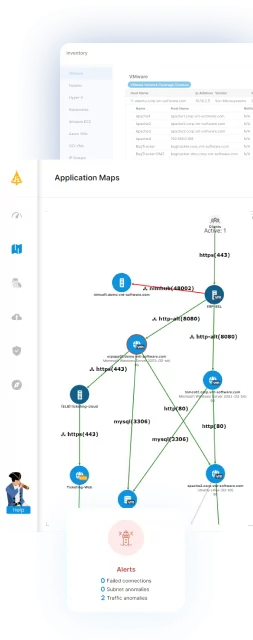
- Real-time asset and dependency visibility: Faddom automatically discovers servers, applications, and communication flows, enabling teams to identify which assets can be safely retired and which are still in use.
- Identification of hidden and forgotten assets: The platform uncovers shadow IT and under-documented systems that often go unnoticed during ITAD planning, which can pose data security risks.
- Safer decommissioning decisions: Faddom displays confirmed upstream and downstream dependencies, helping to prevent accidental service outages during the removal of assets.
- Accurate inventory foundation: It provides continuously updated data that complements the Configuration Management Database (CMDB) and asset records, reducing reliance on outdated documentation.
- Risk reduction during end-of-life activities: Faddom ensures that data-bearing systems are properly identified before disposal, supporting secure data destruction and compliance.
To lower risk and enhance accuracy in IT asset disposition, schedule a demo by completing the form on the right!