
What Is a Configuration Management Plan?
A configuration management plan (CMP) is a document that outlines how an organization will manage changes to its systems, products, or projects. It details the processes, procedures, and tools used to identify, control, and track configuration items (CIs) throughout their lifecycle. The plan ensures consistency, traceability, and integrity by managing modifications and releases of CIs, minimizing disruptions, and providing visibility to stakeholders.
Table of Contents
ToggleKey aspects of a configuration management plan include:
- Configuration identification: Defining and baselining the configuration items (CIs) that require formal change control.
- Configuration control: Establishing a process for evaluating and approving changes to CIs, including change requests, impact assessments, and approvals.
- Configuration status accounting: Tracking and reporting the status of CIs, including versions, history, and any requested modifications.
- Configuration audits: Ensuring that the system or product conforms to its defined configuration requirements through verification and validation activities.
- Roles and responsibilities: Defining who is responsible for each aspect of configuration management.
- Tools and techniques: Specifying the tools and methods used for managing configurations, such as version control systems, document repositories, and change management software.
- Change management process: Detailing how changes are proposed, evaluated, approved, and implemented, including communication and stakeholder engagement.
Benefits of a Configuration Management Plan
A configuration management plan brings structure and control to the management of complex systems. It helps organizations maintain integrity across the lifecycle of a product or service, ensuring that changes are deliberate, traceable, and properly implemented. Below are the key benefits of using a CMP:
- Improved change control: Ensures that all changes are reviewed, approved, and documented, reducing the risk of unauthorized or conflicting updates.
- Enhanced traceability: Tracks every configuration item and its history, making it easier to understand how and why changes were made over time.
- Consistent documentation: Standardizes how configuration information is recorded and maintained, supporting clearer communication and easier audits.
- Better risk management: Helps identify and assess the impact of changes before implementation, lowering the chance of disruptions or failures.
- Efficient issue resolution: Speeds up troubleshooting by providing a clear record of system configurations and changes.
- Regulatory compliance: Supports adherence to industry standards and legal requirements by maintaining detailed records of configuration states and changes.
- Collaboration and transparency: Provides a common reference point for all stakeholders, improving coordination between teams and external partners.
Key Elements of a Configuration Management Plan
Configuration Identification
Configuration identification is the process of selecting and defining the configuration items (CIs) that need to be managed within an environment. Each item, such as a server, software application, document, or network device, receives a unique identifier and is recorded with associated attributes, such as version, location, and owner.
This labeling and documentation enable organizations to maintain a clear, up-to-date inventory, helping teams understand dependencies and anticipate the impact of changes. Proper configuration identification also supports accurate auditing, disaster recovery efforts, and smoother incident response.
Effective identification depends on setting criteria for what should be considered a configuration item. This often involves input from multiple stakeholders to define the scope, granularity, and hierarchy of CIs.
Configuration Control
Configuration control refers to the process that governs changes to the configuration items throughout their lifecycle. This process ensures that all alterations are reviewed, authorized, documented, and communicated before implementation.
Typically, it incorporates change request procedures, impact assessment, peer review, and formal approval by designated configuration control boards (CCBs). The objective is to prevent unauthorized or conflicting modifications that could disrupt system integrity or performance.
Strong configuration control fosters accountability and visibility into the change process, reducing the risk of configuration drift or unintended consequences from haphazard adjustments. It establishes a clear audit trail, so all changes are traceable and reversible if necessary.
Configuration Status Accounting
Configuration status accounting captures and reports the status of configuration items and approved changes at any point in time. It maintains records of configuration baselines, change requests, status of pending or completed changes, and history of all modifications.
This transparency allows stakeholders to understand what is currently deployed, what has changed, and when specific actions occurred. Accurate status accounting supports decision-making and risk management by providing real-time visibility into the state of the environment.
A configuration status accounting system is vital for auditing, compliance, and supporting incident response. It can be automated using modern tools that integrate with other lifecycle management platforms, ensuring records remain current and accessible. Status accounting also helps teams analyze trends, detect deviations from intended baselines, and prepare for audits.
Configuration Audits
Configuration audits are formal reviews that verify whether configuration items and their documentation conform to the defined standards outlined in the configuration management plan. These audits check that actual configurations match recorded baselines as well as confirm the effectiveness of change control procedures.
Audits uncover unauthorized modifications, discrepancies, and gaps in status accounting, supporting both quality assurance and regulatory compliance initiatives. Regular configuration audits help organizations prevent configuration drift and uphold required standards by systematically checking conformance.
Audit results enable timely corrective actions, mitigating risks stemming from misaligned or improperly controlled assets. Audits also serve as valuable learning opportunities; recurring issues discovered during audits can indicate the need for process improvement or staff training.
Roles and Responsibilities
Assigning clear roles and responsibilities is critical to the success of configuration management. The configuration manager typically owns the CMP, ensuring the implementation, maintenance, and continuous improvement of all configuration processes. Configuration control boards (CCBs) review and authorize changes.
Other project members, including system owners, developers, testers, and end users, must understand their obligation to document configuration data, participate in reviews, or report discrepancies. Assignments must be clearly outlined to avoid confusion or gaps in process execution.
Effective execution depends on well-documented role definitions and regular communication among team members. This clarity accelerates decision-making, supports effective escalation and resolution of issues, and prevents tasks from being overlooked. Regular training ensures that everyone understands updated processes, tools, and their expected contributions.
Tools and Techniques
Modern configuration management relies on specialized tools and techniques to track, automate, and enforce CMP processes. Tools such as configuration management databases (CMDBs), version control systems, and infrastructure-as-code frameworks (e.g., Ansible, Puppet, Chef) enable real-time oversight and rapid, repeatable deployment of configuration changes.
These tools enable automated identification, recording, and validation of configuration items, which reduces manual effort and the possibility of human error. Techniques such as baseline management, automated compliance checking, change request workflows, and visualization dashboards provide ways to monitor and control environments.
Integration with ITSM and continuous integration/continuous deployment (CI/CD) pipelines ensures that configuration management remains synchronized with other IT processes. Selecting the right tools and techniques depends on the organization’s scale, regulatory requirements, and maturity.
Learn more in our detailed guide to configuration management tools
Change Management Process
The change management process within configuration management defines how proposed alterations to configuration items are handled from request to completion. It typically begins with the submission of a change request, which undergoes impact analysis and review before being approved or denied by a configuration control board.
Approved changes are planned, implemented, documented, and validated to ensure they meet desired objectives without causing unintended disruptions. This process helps mitigate risks and ensures traceability of every modification.
Integrating the change management process with configuration management ensures that all changes are reflected accurately in the CMP. Status updates, rollback planning, and communication protocols are embedded in the process, making it easier to handle complex, interconnected projects.

Lanir specializes in founding new tech companies for Enterprise Software: Assemble and nurture a great team, Early stage funding to growth late stage, One design partner to hundreds of enterprise customers, MVP to Enterprise grade product, Low level kernel engineering to AI/ML and BigData, One advisory board to a long list of shareholders and board members of the worlds largest VCs
Tips from the Expert
In my experience, here are tips that can help you better implement and sustain a Configuration Management Plan (CMP):
-
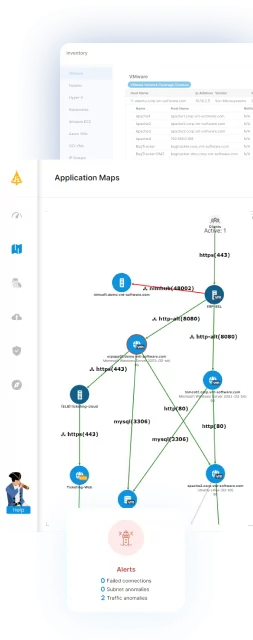
Use CI relationship maps to prevent downstream failures: Most CMPs track individual CIs but overlook visualizing relationships. Building relationship maps (e.g., app-to-server, server-to-network, etc.) helps anticipate cascading effects of changes and improves impact analysis precision.
-
Establish parallel environments for change simulation: Before applying major changes, test them in an environment that mirrors production. This reduces risk, reveals unintended side effects, and improves change rollout planning.
-
Tag configurations with business criticality levels: Annotate CIs not just by technical attributes but by their business impact (e.g., revenue-generating, compliance-sensitive). This enhances prioritization, speeds incident triage, and supports risk-based change approvals.
-
Automate dependency verification during change planning: Use tools or scripts to dynamically check for dependencies across infrastructure, software, and users before approving changes. This adds a layer of control beyond human reviews and avoids surprises during implementation.
-
Incorporate rollback benchmarks and checkpoints: Ensure each change plan includes automated checkpoints and rollback benchmarks. This enables surgical reversions when needed and gives teams clear indicators for when to abandon a change mid-execution.
Who Should Develop and Approve the Configuration Management Plan?
The configuration management plan should be developed by the configuration manager in collaboration with relevant stakeholders such as project managers, technical leads, security officers, and, where applicable, compliance specialists.
This collaboration ensures that the CMP addresses all project or system requirements and that configuration management procedures align with business objectives and regulatory mandates. Early involvement of these parties ensures that the plan is practical and enforceable across all phases of the project or system lifecycle.
Approval of the configuration management plan typically rests with senior management, steering committees, or a designated configuration control board. These authorities verify that the plan aligns with organizational strategy, budget, standards, and risk tolerance. Their formal sign-off enforces accountability and organizational buy-in.
Example of a Configuration Management Plan Template
A typical configuration management plan (CMP) template includes sections that guide organizations in implementing consistent configuration management practices. The example below is adapted from the US Government StateRAMP CMP template and outlines the major components commonly included:
1. Introduction & Purpose
Explains the importance of managing system configuration and outlines how the CMP supports secure and controlled changes throughout the system’s lifecycle.
2. Scope
Defines which systems the CMP applies to, typically categorized by impact level or classification. It also specifies exclusions, such as responsibilities retained by customers.
3. System Description
Includes a general overview of the system and references key elements like the system development life cycle (SDLC).
4. Configuration Management Policy
References the organization’s formal configuration management policy, which may be located in a separate document.
5. Roles and Responsibilities
Identifies key roles involved in configuration management (e.g., change manager, change approval board, system users) and outlines their responsibilities.
6. Configuration Control Board (CCB)
Describes how the CCB functions, its membership, meeting frequency, and how it reviews and approves changes.
7. Baseline Configuration Management
Details the process for establishing and managing system baselines, including system images, software configurations, and version tracking.
8. Requesting a Change
Outlines the procedures for submitting change requests and includes the following subcomponents:
- 8.1 Change Types and Schedules: Defines normal, expedited, emergency, and routine changes, with corresponding approval and scheduling criteria.
- 8.2 Change Planning: Covers the assessment and preparation needed before implementing a change.
- 8.3 Change Testing and Security Impact Analysis: Describes testing requirements and methods for analyzing potential security impacts.
- 8.4 Change Implementation: Documents how approved changes are deployed and verified.
- 8.5 Change Control and Documentation: Specifies required documentation and recordkeeping for each change phase.
- 8.6 Change Monitoring: Lists monitoring techniques used post-change, such as file integrity checking or inventory scans.
- 8.7 Communication and Reporting of Changes: Defines how and to whom changes are communicated.
- 8.8 Maintenance Window: Notes when scheduled system maintenance typically occurs.
9. Appendices
- Appendix A: Change Request Form: Provides a standard template or example form that includes fields for change description, justification, impact analysis, and approvals.
- Appendix B: Security Impact Analysis: Contains a structured template to assess the security implications of proposed changes.
This format provides a framework that aligns with industry and regulatory expectations for configuration management in cloud-based or hybrid IT environments.
Best Practices for Effective Configuration Management Plan
Here are some of the ways that organizations can ensure their CMP meets their needs.
1. Establish a CMDB as the Single Source of Truth
Organizations should establish a CMDB as the authoritative source for configuration data, used by all relevant teams. This centralization enables rapid pinpointing of issues, simplifies audits, and supports effective change management. Integrating the CMDB with discovery tools and monitoring systems ensures it remains accurate and up-to-date with minimal manual intervention.
Maintaining completeness and accuracy in the CMDB requires routine reconciliation, automated discovery, and stakeholder commitment to promptly updating changes. The CMDB must reflect real-world conditions, and all dependencies must be documented to avoid data gaps. This single source of truth accelerates troubleshooting, impact analysis, and compliance reporting, driving higher efficiency and lower risk throughout the systems lifecycle.
2. Align People and Processes Before Implementing Tools
The organization must clearly define configuration management standards, workflows, and responsibilities. Every stakeholder, from executives to IT staff, should be engaged to ensure shared understanding of objectives and procedures. Early involvement prevents resistance, reduces mistakes, and increases commitment to following the plan.
Once processes are established and people are trained, selecting appropriate tools becomes significantly more straightforward and effective. Technology should support, not dictate, process design. Regular process reviews and adjustments based on feedback further optimize efficiency and adaptability.
3. Adopt a Standard CM Framework and Lifecycle
Using a recognized configuration management framework, such as ITIL, ISO/IEC 20000, or CMMI, provides structure for CMP procedures, baselines, and metrics. Standard frameworks offer models for defining workflows, roles, and toolsets, which helps organizations avoid reinventing the wheel. Adhering to a standard ensures consistency, reduces training time, and supports successful audits, especially in industries subject to frequent regulatory assessment.
Implementing a full configuration management lifecycle, from identification through disposal, enables tracking and management of all configuration items. This approach enables systematic onboarding of assets, maintenance of baselines, documented change control, and retirement or archiving at end-of-life. The result is a more predictable, resilient environment.
4. Integrate CM Into DevOps and Agile Workflows
By embedding configuration controls and audits into CI/CD pipelines and sprint cycles, organizations achieve automation, consistency, and visibility without slowing delivery. This approach enables rapid change, rollbacks, and iterative improvement while preserving compliance with configuration standards.
DevOps integration also fosters stronger collaboration between development, operations, and security teams. Automated checks during builds, releases, and deployments reduce manual overhead and ensure deviations from approved baselines are immediately detected. Adapting configuration management to emphasize iteration and responsiveness helps organizations maintain both the speed and control needed to deliver value continuously.
5. Ensure Security and Compliance Through CM
The CMP should specify secure configurations for all items and enforce regular monitoring for unauthorized changes or vulnerabilities. Configuration records and change histories enable rapid investigation of security incidents and support forensic analysis. Regular CM-driven audits provide evidence of compliance with standards such as NIST, ISO/IEC 27001, or industry-specific mandates.
To ensure security and compliance, organizations must couple configuration management with vulnerability scanning, patch management, and incident response processes. Automated controls, such as policy enforcement and alerting, help prevent misconfigurations that could lead to security breaches or compliance findings.
Empowering Configuration Management with Faddom Application Dependency Mapping
A strong configuration management plan relies on having a complete, continuously accurate view of all systems and how they relate to one another. That level of visibility is difficult to achieve with manual documentation alone, especially in hybrid and multicloud environments where assets change frequently. Automated discovery and real-time dependency mapping give configuration managers the context they need to validate baselines, prevent configuration drift, and support reliable change and impact analysis.
When organizations want to strengthen their CMP with consistent, real-world accuracy, an agentless mapping platform can provide continuous insight into infrastructure, applications, and relationships—keeping CMDB records trustworthy and enabling smoother ITSM processes. These capabilities help reduce risks from undocumented changes, eliminate blind spots, and support audit readiness without adding operational overhead.