What Is Cloud Security?
Cloud security refers to the policies, controls, and technologies used to protect data, applications, and infrastructure in cloud computing environments. It encompasses various aspects, including identity and access management, data protection, network security, and incident response. Effective cloud security is crucial for organizations to protect sensitive information, maintain regulatory compliance, and ensure business continuity.
Table of Contents
ToggleUnlike traditional on-premises security, cloud security accounts for shared responsibility between cloud service providers and customers. Providers secure the underlying infrastructure, while clients manage security for data, applications, and user access. This shared model requires clear boundaries and strong collaboration to maintain a secure posture, given the dynamic and distributed nature of cloud resources.
Cloud security risks include:
- Data breaches: Unauthorized access and disclosure of sensitive data.
- Account hijacking: Gaining unauthorized access to user accounts.
- Misconfigurations: Improperly configured cloud resources that can be exploited by attackers.
- Insider threats: Malicious or negligent actions by authorized users.
- Insecure APIs: Weaknesses in APIs that can be exploited to compromise cloud resources.
Cloud security solutions include:
- Application dependency mapping: Creating an inventory of all dependencies for a better understanding of the application.
- Cloud Workload Protection Platforms (CWPPs): Protecting workloads across multi-cloud environments.
- Cloud Access Security Brokers (CASBs): Enforcing security by limiting access to cloud users.
- Cloud Security Posture Management (CSPM): Identifying and remediating misconfigurations and compliance risks.
- Cloud Infrastructure Entitlement Management (CIEM): Managing and controlling identities and permissions within a cloud environment.
- Cloud encryption tools: Encrypting data at rest and in transit.
- Data Loss Prevention (DLP): Preventing the unauthorized sharing or transfer of sensitive data.
- Identity and Access Management (IAM): Controlling who can access what in the cloud.
- Business continuity and disaster recovery: Protecting against disasters and incidents.
Why Is Cloud Security Important?
As more organizations adopt cloud-based models like IaaS, PaaS, and SaaS, the complexity of managing infrastructure and securing digital assets increases. While these models help offload time-intensive IT tasks, they also introduce new security considerations that businesses must address directly, especially when it comes to protecting sensitive data and ensuring accountability.
Cloud providers generally implement strong baseline security, but they don’t cover everything. Organizations still bear responsibility for securing applications, workloads, and data in the cloud. Failing to do so can lead to vulnerabilities, especially given the limited visibility many teams have into how data is accessed and moved across environments.
Cyber threats are also becoming more targeted and sophisticated, often focusing on cloud platforms because of their widespread use and high-value data. Without proper security controls, organizations may face regulatory compliance issues and governance challenges.
Key Cloud Security Threats and Vulnerabilities
Data Breaches
Data breaches in the cloud stem from external attacks, accidental exposure, or malicious insiders abusing their legitimate access. Organizations handling sensitive information in multi-tenant cloud environments are especially vulnerable. Attackers may exploit weak authentication, misconfigurations, or vulnerabilities to exfiltrate data without detection.
Account Hijacking
Account hijacking in the cloud occurs when attackers gain control of user accounts through stolen credentials, phishing, brute-force attacks, or session hijacking. Once inside, they can manipulate workloads, steal sensitive data, or impersonate legitimate users to escalate privileges.
Compromised accounts are particularly dangerous in cloud environments because they often have access to multiple services and resources, making it easier for attackers to spread quickly and remain undetected.
Misconfigurations and Exposure
Cloud misconfigurations occur when settings for storage buckets, databases, or services are not properly secured, often leaving sensitive resources publicly accessible. This is a leading cause of cloud data breaches.
Poorly managed access controls, default credentials, or open ports can expose cloud resources to unauthorized users or the internet at large, increasing the risk of exploitation by threat actors. Attackers actively scan for misconfigured assets, leveraging automated tools to find and compromise unprotected data. Access Management
Improper access management in cloud environments can grant excessive permissions to users, applications, or systems. Over-privileged accounts and lack of granular access controls make it easier for attackers or unauthorized insiders to access critical data or disrupt services. Weak authentication methods, like single-factor logins, further amplify these risks.
Insider Threats
Insider threats (current or former employees with access to systems) can intentionally leak or manipulate data for personal gain or sabotage. Strong auditing, user activity monitoring, and strict access controls are required to detect suspicious behavior and respond promptly. Early detection limits the scope of breaches and mitigates potential damage.
Insecure APIs and Application Components
Cloud applications often involve complex integrations, APIs, and third-party components that increase the attack surface. Vulnerabilities in application code or third-party packages can expose organizations to remote exploits, data leaks, or account hijacking.
Rapid development cycles in the cloud can cause security gaps if teams overlook secure coding practices. Securing cloud-native applications requires automated code analysis, vulnerability scanning, and continuous patch management.

Lanir specializes in founding new tech companies for Enterprise Software: Assemble and nurture a great team, Early stage funding to growth late stage, One design partner to hundreds of enterprise customers, MVP to Enterprise grade product, Low level kernel engineering to AI/ML and BigData, One advisory board to a long list of shareholders and board members of the worlds largest VCs
Tips from the Expert
In my experience, here are tips that can help you better secure cloud environments beyond the standard practices:
-
Deploy deception technology in cloud environments:
Use decoy systems and honeypots specifically designed for cloud platforms to detect lateral movement and attacker reconnaissance. This can uncover sophisticated threats that evade traditional detection methods.
-
Automate privilege timeboxing for sensitive access:
Rather than just limiting roles, implement ephemeral privilege grants—automatically expiring access after a set time. This minimizes exposure even if credentials are compromised or roles are misused.
-
Continuously scan for credential artifacts in repositories:
Use automated scanning tools to detect cloud API keys or secrets accidentally committed to code repositories or containers. This proactive approach can prevent one of the most common cloud breach vectors.
-
Perform identity blast radius analysis:
Regularly simulate compromise scenarios of user or service accounts to assess how far attackers could move. This helps prioritize IAM tightening and microsegmentation where risk exposure is highest.
-
Include policy-as-code reviews in code merge pipelines:
Treat security policies (like IAM, CSPM rules, etc.) as version-controlled code and review them like application code. This reduces misconfiguration risk and enables peer-reviewed governance.
Cloud Security Domains: What Organizations Need to Secure
Cloud Infrastructure Security
Cloud infrastructure security focuses on protecting compute, storage, and networking components used to build cloud platforms. Safeguards include hardening virtual machines, securing hypervisors, isolating tenants in multi-user environments, and applying patches to infrastructure services.
Automating security controls at the infrastructure level is key to managing scale and complexity. This includes using infrastructure as code (IaC) tools to enforce security baselines and automatic remediation. Regular penetration testing, vulnerability scanning, and adherence to industry standards such as CIS benchmarks help organizations maintain secure cloud foundations.
Cloud Workload Security
Cloud workload security refers to techniques and tools that protect the various workloads that run in cloud environments, including applications, virtual machines, containers, serverless functions. Since workloads are dynamic and distributed, security solutions must provide runtime protection, file integrity monitoring, and threat detection regardless of their location.
Organizations should implement controls that follow workloads as they scale or migrate across cloud regions and platforms. This involves integrating security in CI/CD pipelines, using runtime security agents, and applying container-specific controls. Proper workload segmentation and least privilege access further reduce risk exposure.
Cloud Network Security
Cloud network security defines measures to secure data traffic and control communications within and outside the cloud environment. Key elements include firewall policies, network segmentation, zero trust network access, and encryption of data in transit. Network security controls must adapt to dynamic cloud architectures and support secure connectivity between multiple clouds and on-premises systems.
Visibility into network flows is essential for detecting lateral movement by attackers and unauthorized exfiltration attempts. Implementing microsegmentation, monitoring network logs, and leveraging network-based intrusion detection systems (NIDS) help organizations respond quickly to anomalies and enforce security boundaries.
Cloud Data Security
Cloud data security protects information stored, processed, or transmitted through cloud platforms. It covers encryption at rest and in transit, access controls, tokenization, data masking, and persistent auditing. Ensuring only authorized users and applications can access specific datasets mitigates the risk of leaks or unauthorized modifications.
Robust data security also involves regular backup, secure key management, and compliance with data protection regulations. Organizations should classify data based on sensitivity and apply security controls accordingly. Automated data loss prevention (DLP) tools and activity monitoring help maintain visibility and control over data assets in the cloud.
Key Cloud Security Solutions
There are several types of solutions that assist in securing cloud environments.
Cloud Workload Protection Platforms (CWPPs)
Cloud workload protection platforms (CWPPs) provide unified security for varied workloads (virtual machines, containers, serverless functions) across multiple clouds and data centers. CWPPs deliver features like vulnerability assessment, runtime protection, and behavioral monitoring to detect and prevent attacks targeting workloads in real time.
By integrating into DevOps pipelines, CWPPs enable security to be applied consistently from development to deployment, regardless of where workloads run. Automated patching, anomaly detection, and compliance reporting help organizations manage security at scale and reduce the risk of exploitation across diverse, dynamic environments.
Cloud Access Security Brokers (CASBs)
Cloud access security brokers (CASBs) act as intermediaries between users and cloud services, enforcing security policies for access, data sharing, and app usage. CASBs provide visibility into cloud activity, enable data loss prevention, and enforce compliance controls by monitoring usage patterns and blocking risky actions.
Organizations deploy CASBs to control shadow IT, prevent unsanctioned app usage, and protect sensitive data across SaaS, IaaS, and PaaS platforms. Key CASB capabilities include threat protection, data encryption, access control, and integration with identity and security solutions, making them essential for maintaining governance over cloud adoption.
Cloud Security Posture Management (CSPM)
Cloud security posture management (CSPM) solutions automate the detection and remediation of configuration risks, misconfigurations, and policy violations in cloud environments. CSPMs continuously monitor cloud assets, flagging deviations from best practices or compliance requirements, and can automatically correct certain issues to maintain security baselines.
CSPM tools offer visibility into the overall security posture, generate compliance reports, and support rapid incident response. As cloud environments grow in complexity, CSPMs help organizations assess risk, prioritize remediation, and ensure that security standards are maintained consistently across all accounts and resources.
Application Dependency Mapping
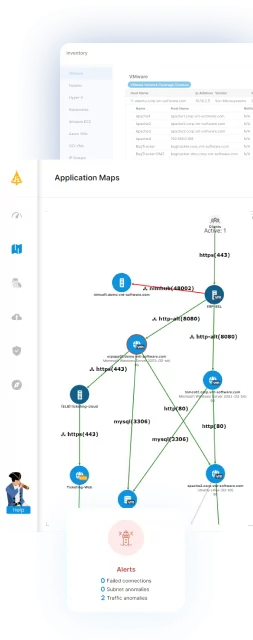
Application dependency mapping creates a visual or programmatic inventory of all services, APIs, databases, and infrastructure components an application relies on. This visibility is essential for understanding the relationships between components, identifying potential security gaps, and tracking the flow of sensitive data.
Security teams use dependency maps to assess risk, enforce segmentation, and ensure proper access controls are in place across the entire application stack. When integrated with vulnerability scanners or incident response tools, these maps enable faster remediation and reduce the risk of cascading failures.
Cloud Infrastructure Entitlement Management (CIEM)
Cloud infrastructure entitlement management (CIEM) tools focus on the governance of identity entitlements and access privileges within cloud infrastructure. CIEM platforms analyze permissions, detect over-privileged accounts, and automate least-privilege enforcement. This reduces the risk of privilege misuse and limits lateral movement by attackers.
CIEM solutions integrate with IAM and CSPM platforms to provide comprehensive visibility into identity-related risks. They generate actionable recommendations, automate role assignments, and continuously monitor for entitlement drift. As cloud environments scale, CIEM enables organizations to maintain precise, secure access control.
Cloud Encryption Tools
Cloud encryption tools secure data both at rest and in transit by converting readable information into an unreadable format, accessible only with proper decryption keys. Encryption renders intercepted or stolen data useless to unauthorized parties and is essential for meeting regulatory standards. Modern cloud platforms provide native encryption features, but organizations may also use third-party tools for additional control over encryption keys.
Effective encryption management includes secure key storage, automatic rotation, and detailed audit logging. Organizations must determine who manages encryption keys, either the cloud provider or internally, based on compliance needs and risk tolerance. Continuous monitoring ensures that encryption policies are enforced for all data across cloud environments.
Data Loss Prevention (DLP)
Data loss prevention (DLP) solutions monitor, detect, and block the unauthorized transmission or exposure of sensitive information in the cloud. DLP tools can scan data at rest and in motion, applying policies that prevent email, file sharing, or storage of confidential data outside approved environments. DLP is crucial to protect intellectual property and fulfill regulatory obligations.
Organizations use DLP to automate the identification and protection of critical data, reducing the risk of accidental leaks or intentional exfiltration. Integrating DLP with cloud platforms allows real-time monitoring and automated response, ensuring that data stays protected even as teams collaborate and share information across the organization.
Identity and Access Management (IAM)
Identity and access management (IAM) solutions control who can access cloud resources and what actions they can perform. These systems authenticate users, enforce policies, and provide granular permissions. IAM is foundational to cloud security because unauthorized access is a common vector for breaches. Effective IAM restricts access to the minimum required and tracks user activity.
IAM features, such as single sign-on (SSO), multi-factor authentication (MFA), and role-based access controls (RBAC), help prevent privilege escalation and unauthorized actions. Organizations should frequently audit permissions, remove unnecessary accounts, and automate policy enforcement to maintain strong identity governance in dynamic cloud environments.
Business Continuity and Disaster Recovery
Business continuity and disaster recovery solutions protect cloud-based workloads and data against disruptions, outages, or catastrophic events. These solutions include automated backups, replication, and failover mechanisms to ensure that critical data and applications remain available and recoverable in the event of attacks, accidental deletions, or infrastructure failures.
A robust continuity plan involves regular testing, backup validation, and clearly defined recovery point and recovery time objectives (RPO and RTO). In cloud environments, automated recovery orchestration enables rapid restoration, minimizing downtime and business impact. Aligning recovery strategies with regulatory and business requirements further strengthens resilience.
Best Practices for Effective Cloud Security
Organizations can improve their security posture in cloud environments by implementing the following best practices.
1. Choose Reputable Cloud Providers
Selecting a cloud provider with strong security controls is the foundation of cloud security. Reputable providers adhere to industry standards, undergo independent audits, and maintain compliance with frameworks like ISO 27001, SOC 2, and FedRAMP. These certifications demonstrate that the provider enforces robust security practices for infrastructure, data protection, and access management.
Organizations should also evaluate providers based on transparency and shared responsibility documentation. Clear definitions of which security tasks fall under the provider and which remain with the customer reduce gaps in protection. Reviewing service-level agreements (SLAs) for uptime guarantees, incident response commitments, and data handling practices ensures that the provider aligns with business and compliance needs.
2. Implement Strong Passwords and Multi-Factor Authentication
Passwords remain a common attack vector, and weak or reused credentials increase the risk of compromise. Organizations should enforce strong password policies, including length, complexity, and uniqueness. Password managers help users comply with these requirements by generating and storing secure credentials, reducing reliance on memory.
Multi-factor authentication (MFA) significantly strengthens account security by requiring additional verification beyond a password. Options include SMS codes, authenticator apps, hardware tokens, or biometric authentication. Applying MFA to all accounts, particularly administrative and remote-access accounts, greatly reduces the likelihood of unauthorized access, even if passwords are stolen.
3. Encrypt Sensitive Data
Data encryption ensures that sensitive information remains protected even if intercepted or accessed without authorization. Cloud platforms typically provide encryption capabilities for data at rest and in transit, but organizations must configure and enforce these features consistently. Using strong encryption algorithms such as AES-256, combined with TLS for secure communication, is recommended.
Effective key management is essential to maintaining encryption security. Keys should be stored in secure key management systems (KMS), rotated regularly, and access should be strictly controlled. Depending on compliance requirements, organizations may choose to manage their own keys rather than rely solely on provider-managed services, giving them greater control over data confidentiality.
4. Regularly Back Up Data
Cloud environments are not immune to data loss from ransomware, accidental deletion, or system failures. Regular backups ensure that organizations can recover quickly from disruptions and maintain business continuity. Backups should be automated, encrypted, and tested frequently to verify that they can be restored successfully.
Storing backups across multiple regions or providers reduces the risk of a single point of failure. Organizations should define recovery point objectives (RPOs) and recovery time objectives (RTOs) based on business needs, ensuring backup strategies align with operational and regulatory requirements. Backup data should also be monitored for tampering, as attackers often attempt to corrupt or delete backups before launching ransomware attacks.
5. Monitor for Suspicious Activity
Comprehensive monitoring and auditing are essential for real-time threat detection and forensic investigation in cloud environments. Organizations should collect logs from infrastructure, applications, and access controls, storing them centrally for analysis. Automated alerting and correlation tools can identify suspicious activity or policy violations quickly.
Continuous monitoring supports compliance with regulatory requirements and supports incident response efforts. Regular audits help spot configuration drifts, unused resources, or unauthorized changes, allowing teams to respond proactively. By monitoring everything, organizations retain visibility and control in dynamic cloud environments, improving their security posture.
6. Educate Employees on Security Best Practices
Human error remains a leading cause of cloud security incidents. Continuous training ensures that employees, developers, and administrators understand modern threats, security best practices, and organizational policies. Regular awareness programs can address phishing risks, password hygiene, and safe use of cloud services.
Training should include guidance on secure configuration, data handling, and incident reporting processes. Simulation exercises and testing help reinforce learning and identify gaps in understanding. A culture of security awareness enables organizations to mitigate risks arising from social engineering, misconfigurations, or negligence.
7. Follow Cloud Security Frameworks
Adopting structured cloud security frameworks provides organizations with a roadmap for building resilient security programs. Frameworks such as the NIST Cybersecurity Framework, ISO/IEC 27017 for cloud security, and the Cloud Security Alliance’s Cloud Controls Matrix (CCM) define best practices for identity, access, data protection, and risk management. These frameworks help organizations standardize security operations and demonstrate compliance with regulatory requirements.
By aligning with established frameworks, organizations can prioritize security investments, reduce misconfigurations, and ensure that controls are applied consistently across cloud environments. Framework adoption also simplifies audits and third-party assessments, providing assurance to customers, regulators, and business partners that security is systematically managed.
Learn more in our detailed guide to cloud security best practices
Improving Cloud Security with Faddom Application Dependency Mapping
Strong cloud security depends on knowing exactly how your applications communicate, where sensitive data flows, and which systems create the highest exposure. Faddom provides that foundation through automated IT documentation and mapping of every server, business application, and dependency across hybrid and multicloud environments. This real-time visibility helps security teams detect misconfigurations, validate segmentation, and understand the true blast radius of a potential breach.
To support faster and more accurate threat handling, Faddom’s Servers at Risk feature analyzes environment activity and assigns clear risk scores, enabling teams to prioritize the most urgent vulnerabilities. Lighthouse AI adds additional context, highlighting unusual or unexpected dependency behavior that may signal configuration drift or risky architectural changes.
By providing security teams with a comprehensive and continuously updated view of their cloud environment, Faddom reduces blind spots, simplifies root-cause analysis, and helps prevent threats that stem from hidden or misunderstood dependencies.
To strengthen your cloud security posture with complete visibility and smarter prioritization, book a demo with our team!