
What Is a Change Advisory Board (CAB)?
A Change Advisory Board (CAB) is a group of business and IT professionals who evaluate and provide recommendations on proposed changes to an organization’s IT systems and services. Its purpose is to ensure changes are implemented in a controlled, secure, and business-aligned manner by assessing risks, potential disruptions, and impact before they are approved. The CAB’s members typically include representatives from different departments, such as IT, security, operations, and business units, along with the change manager.
Table of Contents
ToggleWhat a CAB does:
- Evaluates changes: Reviews and assesses the impact, risk, and feasibility of proposed changes.
- Provides recommendations: Offers guidance and advice to help the change manager make informed decisions about whether to approve, reject, or revise a change.
- Mitigates risk: Helps identify and reduce potential risks and disruptions to business operations.
- Aligns changes with business strategy: Ensures that changes support the organization’s broader business goals and priorities.
- Enables collaboration: Brings together diverse perspectives to ensure a comprehensive evaluation of a change request.
What Does a CAB Do?
Let’s review the primary functions of a change advisory board.
Evaluates Changes
The CAB evaluates proposed changes by reviewing their necessity, assessing technical feasibility, and estimating possible impacts on IT systems and business operations. This involves analyzing documentation, scrutinizing risk assessments, and relying on expertise from members representing key stakeholders and technical areas. CAB meetings cover the potential benefits, aligned objectives, and any prerequisites or resource requirements associated with each change.
The evaluation process helps the organization minimize the chance of unintended consequences, such as service outages or security vulnerabilities. The CAB ensures that any proposed change has clear justifications and that alternative solutions, rollback procedures, and testing plans have been considered and prepared prior to approval.
Provides Recommendations
Beyond making direct decisions on change approvals, the CAB often provides recommendations for modifying or improving change requests. This may include suggesting additional testing, involvement of specific stakeholders, or recommending phased rollouts to limit risk exposure during implementation. Recommendations are grounded in members’ collective knowledge and seek to improve outcomes for both IT and business operations.
CAB recommendations can also address procedural improvements in the change management process itself. For example, if recurring issues emerge, the board may advise amendments to documentation standards, escalation protocols, or communication practices to improve future change reviews and implementation.
Mitigates Risk
A primary function of the CAB is to identify, assess, and mitigate risks associated with proposed changes. During reviews, the board scrutinizes potential failure points, dependencies, and impacts on business continuity or security. Typical risk mitigation actions include implementing additional testing, scheduling during low-usage windows, or requiring contingency and rollback plans.
By proactively addressing risks, the CAB reduces the likelihood of service disruptions, compliance breaches, or data loss. Routine assessment and improvement of risk mitigation measures, informed by post-implementation reviews, ensure the organization continually refines its risk posture as the IT environment evolves.
Aligns Changes with Business Strategy
The CAB helps ensure that IT changes are aligned with organizational business strategies and priorities. During reviews, the board examines whether proposed changes support overarching business objectives, such as regulatory compliance, cost efficiency, customer experience enhancement, or competitive differentiation.
Interest alignment helps prevent misallocated resources on changes that do not drive tangible business value. The CAB ensures that each approved change is a step toward strategic goals, minimizing IT drift and supporting coordinated growth.
Enables Collaboration
Effective CAB operations depend on cross-functional collaboration. The board serves as a platform where representatives from IT, business units, and external partners can discuss, review, and challenge change proposals from multiple vantage points. This fosters knowledge sharing and helps identify overlooked dependencies or risks.
CAB meetings enforce open communication, breaking down silos between technical and non-technical contributors. They enable stakeholders to agree on priorities and implementation schedules, minimizing miscommunications and ensuring everyone is aligned during critical changes.
Members and Responsibilities of the Change Advisory Board
A change advisory board typically includes a cross-functional set of members chosen to represent the interests of both IT operations and the wider business. While the exact composition may vary depending on organizational size and change complexity, common roles include:
- Change manager: Chairs CAB meetings and ensures changes are reviewed systematically. Responsible for coordinating activities and maintaining change records.
- IT operations representatives: Bring insight into infrastructure impacts and capacity planning. They help assess the operational viability of changes.
- Application and system owners: Provide input on the functional implications of proposed changes and confirm alignment with application lifecycles.
- Service managers: Represent service-level objectives and user expectations, focusing on maintaining service quality and performance.
- Information security officers: Evaluate changes from a security risk perspective, flagging any compliance or vulnerability concerns.
- Business unit representatives: Ensure that changes reflect business priorities, timelines, and constraints.
- Vendors or external partners (if applicable): Offer perspectives on third-party systems or services impacted by the change.
Each member is responsible for evaluating proposed changes from their domain’s perspective. They review change documentation, raise concerns, suggest mitigations, and confirm readiness for implementation. Members are also accountable for communicating CAB decisions to their respective teams and ensuring follow-through on action items.

Lanir specializes in founding new tech companies for Enterprise Software: Assemble and nurture a great team, Early stage funding to growth late stage, One design partner to hundreds of enterprise customers, MVP to Enterprise grade product, Low level kernel engineering to AI/ML and BigData, One advisory board to a long list of shareholders and board members of the worlds largest VCs
Tips from the Expert
In my experience, here are tips that can help you better elevate your Change Advisory Board (CAB) effectiveness and relevance in modern IT environments:
-
Implement tiered CAB engagement based on blast radius: Not all changes require full-board input. Establish a CAB participation matrix that escalates only high-impact or cross-domain changes for full review, while smaller scoped changes go through lighter-weight oversight, simplifying governance without sacrificing rigor.
-
Create a “pre-CAB” triage layer to refine submissions: Use a small team to vet and refine change requests before CAB meetings. This improves documentation quality, aligns requests with change policy, and filters out incomplete or misrouted submissions, freeing up CAB time for meaningful review.
-
Integrate real-time CMDB health scoring: Enhance dependency and impact evaluations by pulling in health scores or data freshness metrics from the CMDB. This helps the CAB assess confidence levels in configuration data before greenlighting changes based on potentially outdated information.
-
Use CABs as a feedback loop for change automation: Task the CAB with identifying repeatable, low-risk changes suitable for automation. By curating these changes, CABs can help IT move toward more self-service and auto-approved workflows without compromising governance.
-
Incorporate customer or user proxy roles in strategic CABs: For changes with potential business process or UX impact, invite product managers, user advocates, or customer-facing teams to weigh in. Their insights often highlight non-technical ripple effects missed by IT-centric members.
Types of CABs
Normal / Standard CAB
The standard CAB convenes on a regular basis (often weekly or biweekly) to evaluate, approve, or reject all standard change requests, those that aren’t urgent but can significantly affect IT systems or business operations. Its meetings are planned, allowing review of documentation, risk assessments, and resource needs. The board ensures all stakeholders have adequate time to raise concerns or request clarifications, supporting thorough change evaluation and strategic alignment.
Membership is tailored to ensure broad yet relevant representation relative to ongoing change types. For routine changes, core IT, security, and business leaders usually suffice. However, for change requests with a potentially wide impact, additional expertise from subject-matter experts may be temporarily included. The standard CAB’s predictability and scope allow for structured discussions and informed decision-making.
Emergency Change Advisory Board (ECAB)
The emergency change advisory board (ECAB) is a subgroup, activated specifically to review urgent or critical change requests that require immediate attention, typically in response to incidents, ongoing outages, or severe vulnerabilities. Its primary goal is to expedite decision-making while maintaining risk controls and ensuring rapid restoration or protection of services.
ECAB memberships are smaller, typically focused on the most relevant experts, such as the change manager, incident manager, and key technical specialists, able to make swift yet sound decisions. Though documentation and review standards remain, the ECAB operates under accelerated processes and may accept higher risk due to time-sensitive pressures.
Challenges of Change Advisory Boards
Slowing Down Agility
One of the key criticisms of CAB processes is their potential to slow down organizational agility. Lengthy review cycles and extensive documentation demands can introduce bottlenecks, especially in environments adopting DevOps or agile methods that rely on rapid iteration and frequent deployments. This delay risks frustrating teams and causing missed business opportunities.
Poor Composition or Unclear Roles
An improperly composed CAB, lacking critical expertise or dominated by a single department, often leads to incomplete change evaluations and suboptimal decisions. Clarity in roles is crucial, as members unsure of their input or accountability may overlook important dependencies or risk factors, compromising decision quality and business impact assessments.
Lack of Preparation or Documentation
Ineffective CAB meetings are often the result of poor preparation or insufficient documentation from change requestors. Without detailed impact assessments, rollback plans, or dependency mappings, board members cannot make informed decisions, leading to deferrals or approvals of poorly vetted changes. Quality documentation enables efficient, reliable decision-making and clear post-change accountability.
Best Practices for High-Performing CABs
Here are some of the ways that organizations can ensure that their change advisory board is performing well.
1. Establish Clear Change Evaluation Criteria
High-performing CABs establish objective and transparent evaluation criteria to guide decision-making. Criteria may include risk levels, business impact, resource requirements, compliance considerations, and alignment with strategic priorities. Consistent criteria reduce ambiguity, enable quicker decisions, and promote fairness across all change requests.
Documentation and communication of these criteria are essential. Training stakeholders on what constitutes a well-justified change request encourages standardized, high-quality submissions. Board members should periodically revisit and update criteria to reflect evolving business goals and risk tolerances.
2. Maintain Accurate and Real-Time Dependency Mapping
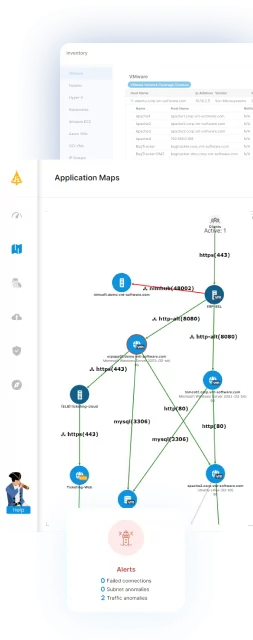
Dependence between IT systems, applications, and processes can turn a minor change into a critical incident if not properly mapped. Maintaining up-to-date and accurate dependency maps is vital for CABs to fully gauge the ripple effects of proposed changes. Real-time dependency visualization helps identify affected services, anticipate conflicts, and inform comprehensive risk assessments.
Tooling that integrates automated dependency discovery and tracking should be prioritized. When members have access to real-time data, evaluations are more precise and less prone to oversights. Regular auditing and validation of mappings guard against configuration drift and undocumented interdependencies.
3. Ensure Proper Change Categorization and Routing
Properly categorizing and routing changes simplifies CAB efficiency and focus. Routine changes with minimal risk may be pre-approved or subject to automated workflows, while high-risk or complex changes undergo rigorous CAB review. Clear categorization criteria help ensure that change requests reach the appropriate oversight level without nonsensical delays or resource drain.
Automated routing in change management systems can direct requests based on attributes like business impact, urgency, and affected technologies. This reduces manual triage burdens and ensures that specialist boards (like ECAB) respond to emergencies promptly, whereas standard CAB handles strategic or broad-impact changes.
4. Use Data-Driven Decision Making
Using data to drive CAB decisions improves objectivity and reduces biases. Historical performance data, change success/failure rates, incident records, and trends help board members make informed choices on approving, denying, or modifying change requests. Data provides early warnings of recurring issues and highlights process improvement opportunities.
CAB meetings benefit from digital dashboards that summarize relevant KPIs and analytics. Quantitative metrics support transparent, auditable decision-making and foster continuous improvement cycles. Making data review integral to the change evaluation process increases accountability and simplifies justification of decisions.
5. Encourage Cross-Functional Representation
Diversity in CAB composition improves the quality and inclusiveness of assessments. Including representatives from IT, operations, security, application development, business units, and suppliers yields broader perspectives and uncovers hidden impacts or dependencies. This cross-functional input is especially critical for changes affecting multiple departments or external stakeholders.
Regularly reviewing, updating, and rotating board membership ensures representation remains aligned with evolving business and technology landscapes. Active participation of all members, not just technical leads, encourages accountability and strengthens the board’s decision-making foundation.
6. Conduct Post-Change Reviews for Failed or High-Risk Changes
Conducting systematic post-change reviews, especially for failed or high-risk changes, enables the CAB to learn from experience and improve future outcomes. These reviews identify root causes, assess the effectiveness of risk mitigation strategies, and provide a forum for honest feedback on process weaknesses or communication lapses. Lessons learned are fed back into change policies, documentation standards, and future reviews.
Structured review frameworks and dedicated follow-up meetings help ensure actionable insights are captured and implemented. This practice instills a culture of accountability and continuous improvement, reducing recurrence of preventable errors and reinforcing stakeholder confidence in the CAB process.
Improving Change Management with Faddom Dependency Mapping
High-performing Change Advisory Boards (CABs) depend on accurate impact analysis and a clear understanding of dependencies. Faddom enhances CABs by providing real-time, agentless application dependency mapping across hybrid environments. This approach replaces static diagrams and manual documentation with a dynamic view of how applications and infrastructure interact. As a result, CAB members can assess risks more confidently and avoid changes that might unintentionally disrupt critical services.
By continually mapping dependencies, Faddom improves change categorization, blast radius analysis, and the accuracy of the CMDB. Change managers gain reliable data that enables faster approvals for low-risk changes and allows for a more thorough evaluation of high-impact changes. This leads to better-informed, business-aligned decisions in complex enterprise environments.
Discover how Faddom can help enterprises approve changes with confidence by requesting a demo today!