
What Is Business Continuity?
Business continuity refers to an organization’s ability to maintain critical business functions during and after disruptive events, ensuring minimal downtime and a return to normal operations. It encompasses proactive planning and preparation to prevent and mitigate disruptions, as well as reactive strategies for recovery.
Disruptions might include natural disasters, cyberattacks, power outages, pandemics, or other incidents that can halt normal operations. The primary goal of business continuity is to reduce the impact of these events so that essential services, functions, and processes continue or are restored with minimal downtime.
Developing business continuity capabilities involves identifying key business areas, processes, and resources, including personnel, technology, and data, that are necessary for operations. It also requires planning and implementing strategies, policies, and technologies that protect these components and allow for efficient recovery.
Table of Contents
ToggleThis is part of a series of articles about Business Continuity Plans.
Why Business Continuity Matters
Even brief disruptions can lead to significant financial loss, reputational damage, and loss of customers. While some businesses can tolerate short-term downtime, sectors like banking, utilities, and healthcare face regulatory obligations that require rapid recovery. These industries must resume operations almost immediately after a disruption to meet legal and service commitments.
Beyond regulatory demands, all organizations face pressure to maintain service availability. Prolonged outages can drive customers to competitors, potentially causing permanent loss of business.
Effective business continuity planning must also account for third parties, especially vendors and supply chain partners. An outage in a critical supplier can create cascading failures that impact multiple parts of the business. Utilizing comprehensive IT mapping to ensure continuity across these interconnected systems is key to reducing risk and maintaining resilience.
Business Continuity vs. Disaster Recovery
While business continuity and disaster recovery are closely related, they serve distinct purposes within an organization’s resilience strategy.
Business continuity focuses on maintaining essential business operations during and after a disruption. Its scope includes people, processes, communications, facilities, and technology. The goal is to ensure the organization can continue to deliver key products or services despite adverse events.
Disaster recovery is a subset of business continuity. It deals with restoring IT systems, applications, and data access after an incident such as a cyberattack, hardware failure, or data center outage. Disaster recovery plans often involve backups, offsite replication, and system failover processes.
In practice, business continuity is broader and more strategic, while disaster recovery is more technical and IT-focused. Both are essential, but they require different tools, planning, and expertise to implement effectively.

Lanir specializes in founding new tech companies for Enterprise Software: Assemble and nurture a great team, Early stage funding to growth late stage, One design partner to hundreds of enterprise customers, MVP to Enterprise grade product, Low level kernel engineering to AI/ML and BigData, One advisory board to a long list of shareholders and board members of the worlds largest VCs
Tips from the Expert
In my experience, here are tips that can help you better strengthen business continuity programs beyond what’s described in the article:
-
Map interdependencies across processes:
Don’t just document standalone critical functions—map how processes depend on one another across IT, facilities, people, and suppliers. This often reveals hidden single points of failure.
-
Establish “minimum viable operations” (MVO):
Define what the absolute minimum level of service looks like for the business. Planning for MVO helps prioritize limited resources during severe disruptions when full recovery isn’t immediately possible.
-
Create “continuity tiers” for applications:
Classify systems into tiers (e.g., mission-critical, important, deferrable) with different RPO/RTO requirements. This avoids wasting resources on over-engineering recovery for non-critical systems.
-
Test communication under degraded conditions:
Many plans assume normal comms channels are available. Simulate scenarios where email, phones, or even corporate messaging tools are down, and train staff to use backup methods.
-
Incorporate workforce flexibility:
Beyond remote work, prepare for scenarios where you need to rapidly reassign staff, shift workloads to different regions, or temporarily outsource operations. This prevents bottlenecks when key personnel are unavailable.
What Is Included in a Business Continuity Plan (BCP)?
A business continuity plan (BCP) is the documented playbook that brings together all the elements of business continuity into a single, structured framework. While the exact format varies by organization and industry, most BCPs include several key sections:
- Objectives and scope: Defines the purpose of the plan, the business areas it covers, and the types of disruptions it addresses. This ensures that stakeholders understand the plan’s intent and limitations.
- Roles and responsibilities: Identifies key personnel, decision-makers, and backup contacts. It outlines who is responsible for activating the plan, leading recovery efforts, and communicating with staff, customers, and external partners.
- Incident response procedures: Provides step-by-step instructions for assessing a disruption, declaring an incident, and initiating recovery activities. This section usually includes escalation criteria and communication protocols.
- Recovery strategies: Describes the methods and resources required to restore critical functions. This may cover alternate work locations, remote access, backup systems, and manual workarounds.
- Communication plan: Details how information will be shared during a disruption. It includes internal communication channels, external messaging to customers or regulators, and templates for consistent and timely updates.
- Resource and contact information: Lists essential resources such as IT systems, applications, vendors, and third-party providers, along with up-to-date contact details for rapid coordination.
- Testing and maintenance procedures: Explains how the plan will be validated, updated, and improved over time. This ensures that the BCP stays aligned with organizational changes and emerging risks.
A well-structured BCP provides clear guidance during a crisis, reducing confusion and enabling a coordinated response that minimizes downtime and business impact.
Related content: Read our guide to business continuity strategy
Key Business Continuity Technologies
There are several types of solutions that help organizations implement business continuity measures.
Data Protection and Recovery Technologies
Data protection and recovery technologies are central to business continuity. This includes routine data backups, replication, snapshots, and disaster recovery solutions to restore data quickly after loss or corruption. Modern approaches leverage cloud-based technologies to ensure data is stored securely offsite and can be restored rapidly and reliably.
Continuous data protection systems can further improve resilience by offering granular, real-time backup and rapid rollback to prior states. Redundancy and automated failover systems reduce the risks of data loss, ensuring that business-critical information remains available under adverse conditions.
Cloud and Infrastructure Resilience
Cloud adoption has become a core part of building infrastructure resilience for business continuity. Cloud platforms offer built-in redundancies, distributed architectures, and disaster recovery features that reduce reliance on single points of failure. Organizations can quickly shift workloads and resources between cloud data centers, minimizing service interruptions across geographies.
Virtualization, load balancing, and automated failover mechanisms are key components that boost infrastructure resilience outside the cloud as well. These technologies ensure applications and systems remain accessible even when hardware or network components fail.
Cybersecurity and Resilience
Cybersecurity protects against threats that could cripple operations, such as ransomware or targeted cyberattacks. Anti-malware, intrusion detection, endpoint protection, and identity management tools help prevent breaches. Meanwhile, incident response systems enable organizations to isolate threats quickly and restore operations to a known-good state.
Resilient cybersecurity goes beyond prevention, encompassing detection, containment, and recovery. Integrating security with business continuity strategies ensures that the response to cyber incidents is swift and coordinated.
Application Dependency Mapping (ADM)
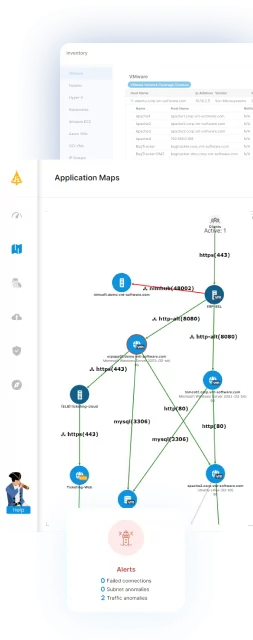
Application dependency mapping identifies how applications rely on underlying systems, services, and third‑party components. These maps reveal critical paths and hidden interdependencies that affect business continuity during failures. By understanding which applications depend on shared databases, network segments, or suppliers, teams can identify single points of failure and prioritize continuity controls where impact is highest.
ADM also supports more accurate recovery planning. Dependency graphs help determine which systems must be restored first to meet recovery objectives and maintain minimum viable operations. When integrated with monitoring tools, ADM can flag upstream failures before they cascade into broader outages, improving situational awareness during disruptions.
Monitoring, Analytics and Automation
Monitoring and analytics are vital for early detection of issues that could disrupt business continuity. Automated monitoring tools provide real-time insights into system health, network activity, application performance, and environmental conditions. Combined with analytics, these systems can identify anomalies, predict failures, and trigger pre-defined response workflows before problems escalate.
Automation simplifies repetitive response tasks such as failover, backup initiation, and alerting, reducing response times and minimizing human error. Advanced analytics also support post-incident reviews, helping organizations improve their continuity strategies based on objective data and trend analysis.
Supply Chain and Operational Continuity
Operational continuity extends to external dependencies like suppliers, logistics partners, and service vendors. Supply chain resilience technologies use analytics, digital tracking, and scenario planning to identify and mitigate vulnerabilities that could disrupt critical workflows. Tools such as supplier management platforms and logistics dashboards help monitor the status of goods and services in real time.
Integrating these systems with enterprise resource planning (ERP) and business process automation ensures continuity even when external parties face disruptions. Effective supplier risk management, coupled with redundant sourcing and contingency plans, is necessary for business continuity, especially in industries with mission-critical external dependencies.
Business Continuity Future Trends
Smart Continuity: AI and Cloud Take the Lead
AI is increasingly used to predict failures, analyze incident patterns, and automate continuity tasks such as failover, resource scaling, or rerouting traffic. These systems reduce manual decision‑making during crises, helping organizations respond faster to outages or cyber incidents. Machine learning models can detect early signals of degradation in infrastructure or supply chains, allowing teams to intervene before a service disruption occurs.
Cloud platforms also continue to reshape continuity strategies by providing elastic infrastructure, distributed redundancy, and built‑in disaster recovery capabilities. Organizations are moving toward cloud‑native continuity models where workloads shift automatically across regions. This reduces reliance on traditional, hardware‑heavy continuity sites and improves recovery consistency.
Hybrid/Remote Work and Operational Flexibility
Hybrid and remote work models require continuity plans that assume staff may be distributed across regions, networks, and time zones. This demands secure remote access, cloud‑based collaboration tools, and policies that support critical operations even when physical locations are unavailable. Continuity strategies must account for scenarios where teams cannot access primary offices due to natural disasters, transportation failures, or localized outages.
Operational flexibility now extends beyond remote work to include dynamic workload distribution. Organizations increasingly design workflows that can shift across locations, teams, or outsourced partners when disruptions occur. This reduces the impact of personnel shortages or regional incidents by enabling operations to continue wherever capacity is available.
Third-Party Supply-Chain Risk and Vendor Resilience
Supply chain disruptions, from material shortages to vendor outages, have become a major continuity risk. Organizations increasingly use real‑time supplier monitoring tools, financial‑health scoring, and geopolitical risk models to identify vulnerabilities early. These insights help teams build redundancy and prepare contingency plans before a partner failure impacts operations.
Vendor resilience assessments now extend beyond contracts to include verification of a supplier’s own continuity capabilities. Businesses are adopting tiered supplier models, diversification strategies, and alternate logistics routes. This reduces concentration risk and ensures continuity even when critical partners face operational or regional disruptions.
Best Practices for Effective Business Continuity
Organizations can improve their business continuity efforts by incorporating the following practices.
1. Secure Executive Sponsorship
Executive sponsorship provides the authority and resources necessary to make business continuity viable. Without leadership buy-in, continuity planning often stalls due to lack of funding, competing priorities, or limited engagement from business units. Executives should formally endorse continuity policies, allocate budget for technologies like backup and failover, and hold managers accountable for maintaining recovery plans.
Sponsorship also ensures alignment between continuity goals and the organization’s strategic objectives. In regulated industries, visible leadership commitment also demonstrates compliance to auditors and regulators.
2. Integrate with Enterprise Risk Management
When business continuity is treated as a standalone program, it often misses critical dependencies and creates silos. Integrating it with enterprise risk management (ERM) ensures that continuity threats are evaluated alongside financial, operational, and compliance risks. This integration allows organizations to prioritize continuity investments based on enterprise risk appetite and tolerance.
For example, if ERM identifies data integrity as a top risk, continuity planning can emphasize technologies like immutable backups and replication. Embedding continuity metrics into ERM reporting also provides executives with a single view of organizational resilience, helping them make informed decisions about resource allocation and risk trade-offs.
3. Diversify Supply Chains and Vendors
Single points of failure in supply chains are among the most common causes of prolonged business disruption. Organizations should reduce dependency on individual vendors by establishing secondary suppliers, sourcing from different geographic regions, and negotiating contractual obligations for service continuity.
Regular supplier risk assessments can identify vulnerabilities such as financial instability, concentration in high-risk regions, or lack of backup manufacturing capacity. Digital supply chain monitoring tools can track shipments, inventory, and supplier performance in real time, giving organizations early warning of disruptions.
A mature strategy may also include predefined contingency plans such as switching to alternate logistics providers or reallocating production to unaffected sites.
4. Conduct Cross-Functional Drills
Tabletop exercises and live simulations reveal how well different teams coordinate under pressure. In practice, incidents affect multiple functions simultaneously: IT may restore systems, HR may manage staff relocation, legal may handle regulatory communication, and operations may shift workloads to alternate facilities.
Drills that involve only one department overlook these interdependencies. By engaging multiple teams, organizations can identify bottlenecks, clarify escalation paths, and refine communication strategies. Effective exercises should use realistic, evolving scenarios such as a ransomware attack that spreads to suppliers, or a regional power outage affecting multiple facilities.
5. Measure and Improve Continuity Performance
Performance measurement is essential for determining whether business continuity strategies work as intended. Recovery time objectives (RTOs) and recovery point objectives (RPOs) provide clear benchmarks for acceptable downtime and data loss, while incident response times and exercise completion rates measure operational readiness. Metrics should be tracked over time to identify trends and areas needing investment.
After real events or drills, organizations should conduct structured after-action reviews to evaluate performance against these benchmarks. Continuous improvement may involve updating recovery strategies, replacing outdated technologies, or adjusting staff training.
Related content: Read our guide to business continuity management
Improving Business Continuity with Faddom Application Dependency Mapping
A key challenge in business continuity is understanding the dependencies between business applications, servers, and infrastructure. During a disruption, the lack of visibility can turn a single failure into a larger outage. Faddom addresses this issue by continuously mapping real traffic flows and illustrating how each system is interconnected. This capability enables different teams to identify critical paths, avoid hidden points of failure, and prioritize the restoration of essential services to maintain operations. By providing accurate, real-time insights into system dependencies, organizations can enhance both their preparedness and their response capabilities during incidents.
If you’d like to see how Faddom can support your business continuity strategy, please fill out the form on the right to schedule a demo!