
What Is Technical Debt?
Examples of technical debt include taking shortcuts in code, like skipping two-factor authentication to meet a deadline, and not maintaining a system, such as delaying a framework update, which can lead to security vulnerabilities or make future development more difficult. Other examples include insufficient testing, poor code quality or documentation, and using outdated libraries or poorly designed architectures.
Real world examples of technical debt include:
Table of Contents
Toggle- Sonos: Long-deferred architectural updates, compounded by organizational instability, led to reputational damage and missed business objectives in 2024.
- Southwest Airlines: Delayed modernization of legacy systems led to catastrophic scheduling failures during a 2022 winter storm, demonstrating the cost of outdated architecture and manual workflows.
- Nokia: Years of accumulated complexity in the Symbian OS prevented rapid adaptation to smartphone trends, contributing to the company’s market collapse as iOS and Android rose.
- Knight Capital Group: Dormant legacy code inadvertently activated during a software deployment in 2012 caused $440 million in losses within 45 minutes, leading to the firm’s collapse.
- The Y2K Crisis: Widespread use of 2-digit year formats to save memory created massive remediation costs and global risk at the turn of the millennium, an example of debt embedded in foundational assumptions.
We’ll describe these real world examples in more detail, and in addition, provide general examples of the following types of technical debt:
- Skipping security features: Building a login system without two-factor authentication to ship a product faster, only to have to add it later, which is more complex since the initial design didn’t account for it.
- Outdated libraries and frameworks: Using an older version of a framework that contains security risks. Updating it would require extensive code changes, so the update is postponed, accumulating debt.
- Insufficient or missing test coverage: Forgoing automated testing or writing incomplete tests to save time, which results in more bugs and higher maintenance costs in the future.
- Poor code quality and duplication: Writing code that is hard to read, maintain, or modify due to poor design choices or lack of standards, making it difficult for new developers to work with.
- Lack of documentation or outdated documentation: Not documenting code or project architecture, which leads to confusion and makes it time-consuming for team members to understand and work with the system later.
- Hard-coded values and fragile implementations: Writing values directly into the code instead of making them configurable, which prevents the application from being flexible and requires code changes for simple adjustments.
- Suboptimal initial architecture decisions: Choosing architectures that don’t support future scale or flexibility creates long-term constraints. These early decisions often trade simplicity for speed.
- Tightly coupled components that block change: Highly interdependent modules make it hard to isolate and update functionality. This tight coupling increases the risk of system-wide failures and slows down development.
- Accumulated bug backlogs: Postponing bug fixes in favor of new features results in a growing list of known issues. These unresolved defects erode software quality, frustrate users, and divert engineering time away from innovation.
Over time, technical debt can impede productivity, increase the likelihood of defects, and make system upgrades and scaling efforts significantly more challenging. While some technical debt is strategic and temporary, taken on knowingly to achieve business goals, unchecked or unmanaged technical debt can rapidly constrain an organization’s ability to innovate and respond to market demands.
Real-World Examples of Technical Debt
Note: The examples in this section are based on publicly available information.
1. Sonos
Sonos’s 2024 app overhaul became a case study in the risks of long-ignored technical debt. For over two decades, the company built new features on top of aging infrastructure, postponing a deeper rebuild. When the time came to support a new product line like the Sonos Ace headphones, the existing codebase proved too brittle and outdated to handle evolving requirements. The decision was made to rebuild the app, during a period of aggressive product timelines, company reorganization, and layoffs that included key QA staff.
The result was a chaotic launch marked by customer outrage, internal conflict, and a surge of over 30,000 complaint emails to the CEO. According to an internal review, teams focused more on patching legacy issues than delivering new functionality, and the app shipped with bugs customers deemed critical.
2. Southwest Airlines
In December 2022, Southwest Airlines experienced operational chaos when its antiquated crew scheduling systems failed to cope with weather disruptions and a surge in flight rescheduling. Their systems, built with outdated architectures and manual dependencies, struggled to recover, resulting in thousands of canceled flights and widespread customer dissatisfaction. The root cause pointed directly to accumulated technical debt in the airline’s IT infrastructure.
Southwest had postponed critical investments in modernizing its technology stack, prioritizing short-term cost savings over architectural upgrades. When these fragile systems broke under stress, the resulting fallout cost the company hundreds of millions in lost revenue and brand value.
3. Nokia
Nokia’s decline in the smartphone market, roughly corresponding to the period 2006 to 2013, is partly attributed to technical debt accumulated from its Symbian operating system. For years, Nokia’s software stack grew increasingly complex and convoluted, making rapid development and innovation difficult. When iOS and Android emerged, Nokia struggled to adapt its aging codebase, which was not designed for modern touch interfaces or app ecosystems.
The resulting inability to innovate quickly led to a significant loss of market share. Nokia’s story illustrates how technical debt can constrain an organization’s capacity to respond to market shifts. Legacy architecture and failure to modernize left the company lagging behind more agile competitors despite its early dominance.
4. Knight Capital Group Trading Disaster
In August 2012, Knight Capital Group suffered a trading disaster stemming from technical debt related to obsolete and poorly maintained code. A new automated trading software deployment unintentionally reactivated dormant, outdated code paths, resulting in a flurry of unintended trades worth billions of dollars. Within 45 minutes, the company lost $440 million, ultimately leading to its acquisition and dissolution as an independent entity.
The incident revealed how unresolved technical debt and inadequate change management can have catastrophic financial and reputational consequences. When old, undocumented, and untested code is left in production environments, the risk of such failures multiplies.
5. The Y2K Crisis
The Y2K crisis is a textbook case of technical debt from shortsighted system design. For decades, software developers stored years as two digits to save memory and storage, assuming their systems wouldn’t run past 1999. This shortcut plagued thousands of legacy applications and critical infrastructure when the calendar rolled over to the year 2000.
Remediation required extensive code audits and updates across industries, costing billions of dollars globally and highlighting the impact of deferred technical decisions on operational continuity. The effort necessary to resolve Y2K issues diverted significant resources from innovation and other business priorities.
Technical Debt Examples by Category
Let’s review the main types of technical debt and see hypothetical examples of each one of them.
1. Skipping Security Features
Omitting essential security features like two-factor authentication, role-based access control, or input validation is a common form of technical debt, especially during early development phases. Teams may bypass these controls to accelerate product delivery, assuming they can address security later.
However, retrofitting security into an existing system is often complex and risky, particularly if the original design didn’t account for secure workflows, threat models, or regulatory requirements. This form of debt accumulates silently but becomes critical as user data, application scope, and compliance obligations grow. Missing or weak security controls expose systems to vulnerabilities and increase the likelihood of breaches.
2. Outdated Libraries and Deprecated Dependencies
Relying on outdated libraries, legacy code, or deprecated dependencies introduces technical debt by exposing systems to security vulnerabilities and missing performance or feature improvements present in newer releases. As well-supported libraries reach end-of-life, they no longer receive patches or updates, creating systemic risks that are often hidden until a critical vulnerability becomes public knowledge.
Additionally, once dependencies fall too far behind current versions, the effort required to upgrade increases and in some cases, a complete system rewrite might be necessary. Frequent dependency updates ensure software remains secure, stable, and compatible with modern tooling.
Neglecting this practice causes small incompatibilities to snowball into larger integration challenges, causing projects to stall when more urgent fixes or updates are needed. Outdated dependencies can also make it harder to recruit and retain developers familiar with obsolete technologies, adding organizational risk and compounding technical debt over time.
3. Insufficient or Missing Test Coverage
Inadequate or absent automated testing is a prime source of technical debt. Without sufficient unit, integration, and end-to-end tests, teams lack confidence that changes won’t break existing functionality. As a result, code changes require extensive manual testing or, worse, get deployed without comprehensive verification, increasing the likelihood of production failures.
Poor test coverage is often an early shortcut to meet deadlines, but its negative impact surfaces quickly as the complexity of the codebase grows. Proper test coverage acts as a safety net against regressions and is crucial for enabling refactoring and rapid delivery.
Accumulating features without complementary tests means future enhancements or bug fixes may inadvertently cause errors elsewhere. Over time, the absence of meaningful tests increases the cost of each change, slows release cycles, and creates a brittle system that is resistant to innovation and improvement.
4. Poor Code Quality and Duplication
Duplicating code, copying and pasting logic across multiple parts of a system, creates a maintenance burden and is a classic form of technical debt. Every duplicate must be updated individually when changes are needed, raising the likelihood of introducing inconsistencies or missing a spot.
Code duplication usually occurs when taking shortcuts to meet tight deadlines or when modularity and reuse are not prioritized in the development process. As duplicated logic spreads across a codebase, tracking down and fixing bugs becomes increasingly complex.
5. Lack of Documentation or Outdated Documentation
Insufficient or outdated documentation contributes to technical debt by making it difficult for new team members to understand and safely modify a codebase. When critical architectural decisions, APIs, or integration points are only communicated verbally or locked in tribal knowledge, teams lose efficiency. The absence of clear documentation increases onboarding time, introduces inconsistencies, and often results in duplicated work or subtle, easily avoidable bugs.
Outdated documentation is equally problematic. When documentation falls behind the system’s current state, developers can be misled, resulting in mistakes and wasted time. Continuous documentation updates aligned with code changes are crucial to mitigate this form of debt.
6. Hard-Coded Values and Fragile Implementations
Hard-coding configuration values directly into code, such as environment variables, credentials, or API endpoints, introduces significant technical debt. These shortcuts are often taken for rapid prototyping or testing but create landmines in production environments, as changes require code modifications and redeployment. Hard-coded values undermine flexibility and expose systems to errors or security lapses if not managed properly.
Fragile implementations that are tightly bound to specific behaviors or assumptions can break easily as requirements evolve. Systems designed without flexibility, such as not abstracting configuration or failing to anticipate scaling needs, create bottlenecks that are expensive to fix later.

Lanir specializes in founding new tech companies for Enterprise Software: Assemble and nurture a great team, Early stage funding to growth late stage, One design partner to hundreds of enterprise customers, MVP to Enterprise grade product, Low level kernel engineering to AI/ML and BigData, One advisory board to a long list of shareholders and board members of the worlds largest VCs
Tips from the Expert
In my experience, here are tips that can help you better prevent, manage, and strategically reduce technical debt beyond the practices already described:
-
Create a technical-debt budget with explicit ROI guardrails: Treat technical debt like financial debt: allocate a recurring “interest payment” budget to prevent debt from compounding. Tie each debt item to a measurable ROI (reduced incidents, faster delivery, lower run cost) to justify prioritization.
-
Use architectural fitness functions to continuously detect decay: Implement automated checks that validate architecture principles (modularity, coupling limits, API boundaries, performance thresholds) so deviations are detected early. This prevents slow architectural drift that silently balloons into major debt.
-
Track debt density hotspots with code-level telemetry: Instrument build and runtime systems to identify files, services, and modules with high churn, high incident frequency, or repeated rollbacks. These hotspots often indicate structural debt that isn’t visible through normal code reviews.
-
Make technical debt visible on product roadmaps: Integrate technical debt items directly into product planning cycles, not as afterthoughts but as first-class roadmap commitments. Visibility aligns engineering and business stakeholders and prevents ad‑hoc “we’ll fix it later” promises.
-
Run debt sprints that align engineering and product teams: Instead of occasional “cleanup days,” schedule periodic debt sprints that combine business-facing improvements with remediation. This encourages shared ownership and prevents engineering from carrying the burden alone.
7. Suboptimal Initial Architecture Decisions
Designing a system with an architecture that is ill-suited to future needs is a subtle but fundamental source of technical debt. Early choices about system modularity, data storage strategies, or integration methods often seem adequate at project inception but reveal major limitations as the project scales or customer requirements shift.
These suboptimal decisions can manifest as scalability bottlenecks, excessive coupling, or complicated data flows that resist refactoring. The fallout from poor architectural decisions becomes visible during periods of rapid growth or when new features require disproportionate engineering effort. Revisiting foundational architecture after significant investment is expensive and disruptive.
8. Tightly Coupled Components That Block Change
Systems where components are tightly coupled rely on direct and intricate dependencies, making them difficult to change independently. Such coupling means that a modification in one module necessitates changes throughout the codebase, slowing development and increasing the risk of introducing cascading defects. This inflexibility is a significant form of technical debt that accumulates when modular design principles are ignored in favor of expedience.
Loose coupling supports parallel development and easier refactoring, extending a system’s lifespan and flexibility. When teams neglect this, innovation grinds to a halt because changes become complex, time-consuming, and risky. Refactoring tightly coupled architectures into more modular, service-oriented structures can be challenging and resource-intensive.
9. Accumulated Bug Backlogs
A persistent backlog of unresolved bugs is both a symptom and a source of technical debt. When teams prioritize rapid feature delivery over defect resolution, minor issues pile up and collectively degrade system quality. Each open bug increases the risk of user-visible failures, operational headaches, and further technical complications as related issues compound.
Over time, unmanaged bug backlogs sap engineering productivity and impact customer satisfaction, ultimately requiring teams to dedicate large blocks of time to “stabilization” rather than innovation. Addressing technical debt from bug accumulation requires explicit prioritization and ongoing commitment to improving software quality.
Best Practices for Preventing Technical Debt
Here are some of the ways that organizations can prevent the accumulation of technical debt.
1. Leverage Dependency Mapping for Visibility
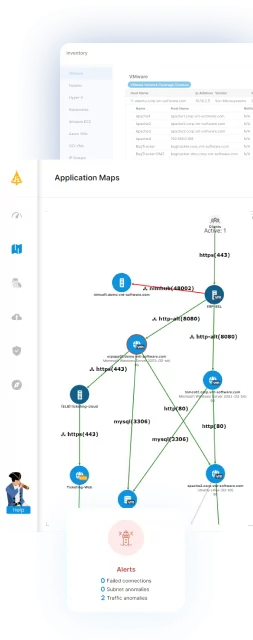
Dependency mapping involves systematically documenting and visualizing all major components, libraries, and integrations that systems rely on. This practice gives teams visibility into how different parts of their application are interconnected and where potential risks or outdated components reside. By regularly updating dependency maps, organizations identify critical failure points, prioritize upgrades, and prevent the silent accumulation of technical debt.
Visibility achieved through dependency mapping helps with impact assessment before implementing changes, reducing the risk of introducing regressions. Armed with this knowledge, teams can coordinate updates, deprecate obsolete dependencies proactively, and avoid painful surprises caused by hidden or cascading technical debt.
2. Maintain Clear and Current Documentation
Consistently maintaining up-to-date documentation is critical in preventing knowledge silos and reducing technical debt. Documentation should cover key architectural decisions, APIs, data models, deployment procedures, and regular operational tasks. When documentation is updated alongside code, new contributors can quickly become productive, and teams reduce the risk of costly misunderstandings or rework.
Outdated documentation, or none at all, slows onboarding and fosters error-prone “tribal knowledge.” By integrating documentation updates into the development process and using automation where possible (like code comment generators or automated deployment scripts), organizations can keep information current and minimize this category of technical debt.
3. Enforce Consistent Coding Standards
Implementing and enforcing consistent coding standards simplifies collaboration across teams, improves code quality, and minimizes technical debt. Consistent styles and conventions eliminate ambiguity, making it easier for developers to understand, review, and modify code written by others. Tools like linters and formatters automate standards enforcement, ensuring that every code change adheres to organizational guidelines.
Lack of coding standards breeds fragmentation and increases onboarding time for new developers. Enforcing standards reduces the chances of introducing hard-to-maintain, idiosyncratic logic. It also lays a solid foundation for automated testing, documentation, and long-term maintainability, keeping technical debt under control.
4. Adopt Automated Testing and Continuous Validation
Automated testing and continuous integration (CI) pipelines help prevent technical debt by catching regressions and inconsistencies early in the development cycle. Automated tests, unit, integration, and end-to-end, ensure that new changes don’t break existing functionality and can be quickly rolled out with confidence. CI systems provide immediate feedback, encouraging a “fail fast, fix fast” culture.
Continuous validation through automated testing reduces reliance on manual QA processes and allows for safe refactoring and rapid innovation. It lowers the cost of change, shortens release cycles, and greatly improves software reliability. Teams that invest early in test automation are less likely to accrue debt that stifles future progress.
5. Modernize Dependencies and Toolchains Regularly
Staying current with dependencies and build toolchains is crucial for avoiding the accumulation of technical debt. Regular updates to libraries, frameworks, and deployment tooling keep systems secure, performant, and compatible with evolving platforms. Proactive modernization efforts enable organizations to leverage new features, minimize integration pain, and keep technical debt in check.
Deferring dependency and toolchain updates increases upgrade costs as breaking changes and incompatibilities pile up. Scheduled dependency reviews, automated update tools, and regular technology radar assessments help teams stay ahead of obsolescence. Organizations that make modernization routine are better positioned to adapt and grow.
6. Use Architecture Reviews and Tech Radar Processes
Regular architecture reviews help teams spot emerging technical debt and correct course before it becomes costly. These reviews involve evaluating design choices, dependencies, scalability, and anticipated business needs, ensuring the system architecture remains aligned with future goals. Conducted with a cross-functional team, these reviews can reveal hidden risks and enable proactive remediation plans.
Tech radar processes formalize the practice of evaluating and tracking technology choices across the organization. By spotlighting which tools, frameworks, or patterns should be adopted, trialed, or deprecated, tech radars prevent ad-hoc decision-making that leads to inconsistent or outdated technology stacks.
Managing Technical Debt with Faddom Dependency Management
Many of the technical debt examples in this article share a common root cause: teams lack a clear, up-to-date understanding of how their systems actually behave in production. Hidden dependencies, undocumented interactions, and outdated assumptions make changes risky, slow down modernization, and allow debt to accumulate unnoticed until it causes outages, security gaps, or failed transformations.
Faddom helps organizations address this challenge by automatically and continuously mapping real application dependencies across on-prem, cloud, and hybrid environments. By revealing how applications, services, and infrastructure truly interact, teams gain the visibility needed to assess impact before changes, identify tightly coupled components, and prioritize refactoring efforts based on real risk. This foundation enables more confident change management, safer modernization, and informed decisions that reduce the likelihood of technical debt turning into business-critical failures.
See how Faddom helps teams reduce technical debt through real-time dependency visibility!